The short answer
- —The historic village is the oldest, densest, most walkable part of Gasparilla Island.
- —Exterior changes in a designated historic area can require design review — confirm scope before you plan a renovation.
- —Older island houses need diligence aimed at their actual construction era, not a generic new-build checklist.
Buying in the Boca Grande Historic District
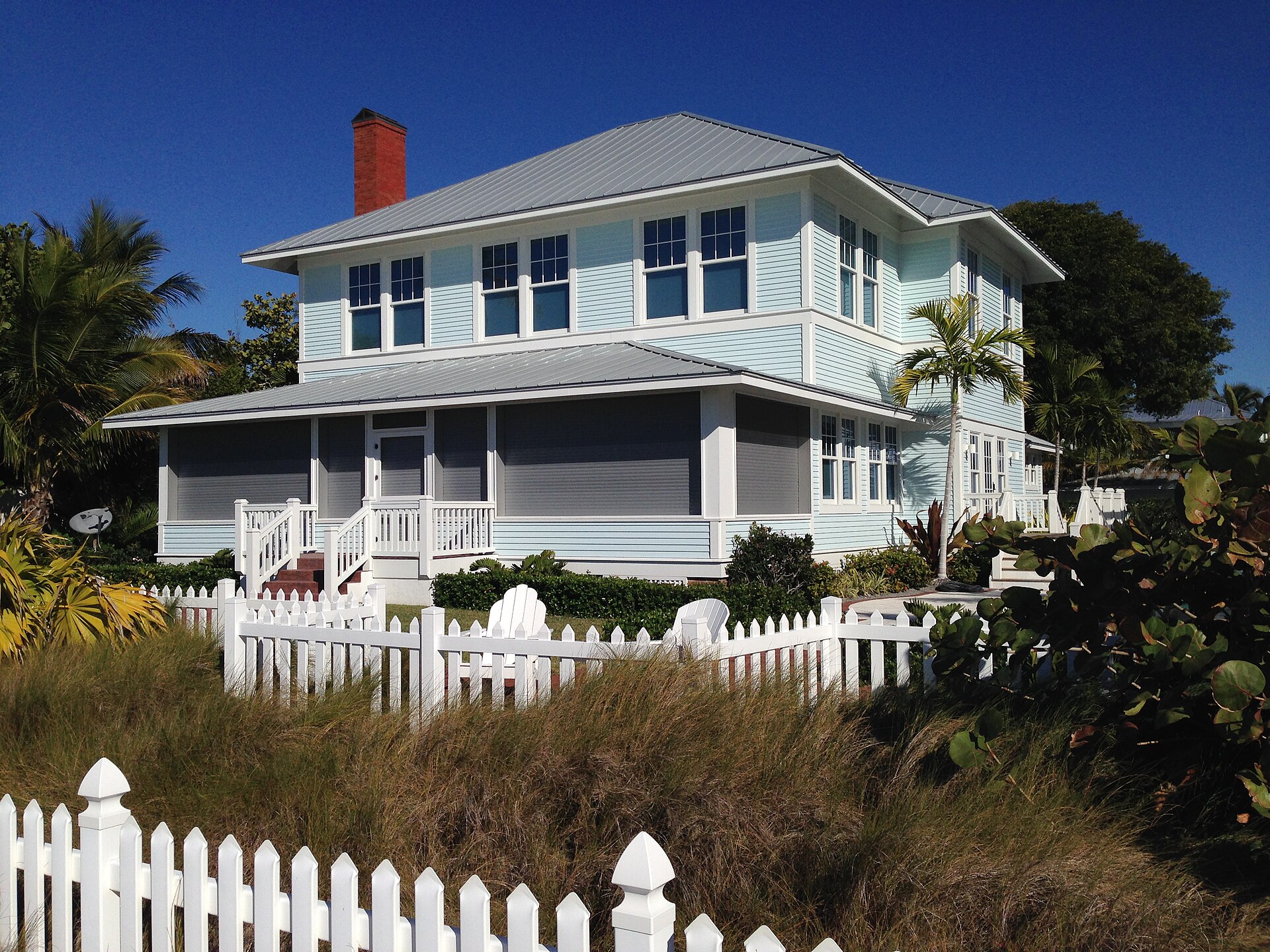
The village end of Gasparilla Island is the reason a lot of people fall for Boca Grande in the first place. Narrow streets, deep porches, tin roofs, banyans and gumbo limbos shading the lots, houses that were built before air conditioning and were designed to work without it. Buying one of these is a different exercise than buying a coastal house built in the last twenty years, and boca grande historic district homes reward buyers who understand the difference going in.
I’m Sabatino Campilii. I work the Gulf-coast markets around Charlotte Harbor and Gasparilla Island. What follows is the diligence framework I use with buyers looking at the older village stock.
What Defines the Historic Village Area
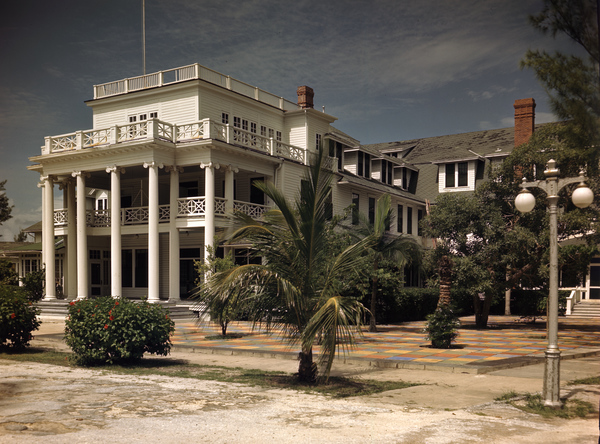
Boca Grande grew up around the phosphate port at the south end of the island and the rail line that fed it. The village that developed alongside that industry — the grid around Park Avenue, the church, the school, the Gasparilla Inn that opened in the early 1910s — is the historic core.
The important distinction for a buyer is between three things that get casually conflated:
- National Register listing — a designation recognizing historic significance. On its own it is largely honorific and does not, by itself, restrict what a private owner may do.
- Local historic designation and design review — a county-administered overlay that can govern exterior alterations, demolition, and new construction within a mapped boundary. This is the one with teeth.
- Private deed restrictions — recorded covenants tied to a particular parcel or subdivision, entirely separate from any government designation.
A property can be subject to all three, one, or none. Before you make assumptions, pull the parcel record from the Lee County Property Appraiser and ask Lee County’s community development staff directly what applies to that address. Do not rely on a listing remark or on what the neighbor says.
Architectural Character You’ll See on Tour
Walk the village and you will see a fairly consistent vocabulary, developed for a hot, humid, storm-exposed island before mechanical cooling:
- Raised floors. Older island houses were commonly built up off grade — for airflow, for drainage, and because the builders were not naive about water.
- Deep porches and generous overhangs. Shade as a cooling strategy, and a genuine second living room.
- Wood frame construction with lap or board siding, often painted white or in soft coastal colors, under metal roofing.
- Tall, operable windows placed for cross ventilation, frequently with shutters that were functional rather than decorative.
- Small-scale massing. One and two stories, modest footprints, set close to the street.
Later additions and thoughtful renovations have layered onto this over decades. Some are excellent; some are additions from an era with different taste and different construction standards. Learning to tell the original fabric from the later work is most of the skill in evaluating one of these houses.
Renovation and Exterior Review Considerations
This is where buyers most often get surprised, so be direct about it early.
If the property is in a locally designated historic area, exterior work is likely subject to review before permitting. That can include roofing material and profile, window replacement, siding, porch alterations, additions, fences, and demolition. Interior work is typically treated more permissively, but that is a general pattern, not a guarantee.
What this means practically:
- Timeline. Review adds steps to a permit schedule. Build that into your renovation plan and into any contract deadline you agree to.
- Materials. A replacement window that is fine in a mainland subdivision may not be approved in a historic area. Impact-rated products that satisfy both wind code and historic character exist, but they cost more and have longer lead times.
- Scope creep. Opening up an older wall frequently reveals conditions that require additional work. Budget a real contingency.
- Documentation. If prior owners did work without permits, that becomes your problem after closing. Ask Lee County for the permit history on the parcel during your inspection period.
The single best move here is to have a preliminary conversation with a contractor who has actually built in the district — and with county staff — before your inspection period expires. Not after.
Lot Sizes, Setbacks and Older Footprints
Village lots were platted long before modern zoning, and many are smaller and narrower than what you’d find in a contemporary subdivision. Houses often sit closer to the street and to the side property lines than current setbacks would permit for new construction.
That produces a specific condition: an existing structure may be legally nonconforming. It can remain as it is, but the rules that govern rebuilding, expanding, or reconstructing after significant damage can be more restrictive than the current building suggests. This is not exotic — it is normal for historic districts everywhere — but it is exactly the kind of thing a buyer needs to understand before planning a second story or a wraparound addition.
Get clear on: the actual platted lot dimensions, current zoning and setbacks, whether the existing structure conforms, and what happens under the applicable rules if it were substantially damaged. Your title work and the county are the sources, not the seller.
Walkability to Park Avenue and the Beach
The functional argument for the village is simple: you can live here without driving much. Groceries, hardware, the post office, restaurants, the library, and the beach are all within a walk or a short golf-cart ride for most village addresses.
That said, walkability varies block to block in ways that matter more than they look on a map. A house three streets back from Park Avenue is a genuinely different daily experience than one on it — quieter, but also further from everything. And Gulf access differs: some village properties have a short, direct walk to a beach access point; others require a longer route.
When you tour, walk the actual routes at the actual times you’d use them. Walk to the coffee shop in the morning. Walk to the beach with a chair. It sounds obvious; almost nobody does it, and it’s the most informative twenty minutes of the trip.
For a wider view of how village living compares with the rest of the island, see Boca Grande island living: what buyers should know.
Due Diligence Specific to Older Island Homes
Run a checklist aimed at the construction era, not a generic one:
- Foundation and structural. For raised construction, inspect piers, beams, and the crawl space directly. Look for prior water intrusion, rot, and inadequate later repairs.
- Framing and wood decay. Termites and moisture are the two long-term adversaries of a wood-frame island house. Bring an inspector who will actually probe, not just look.
- Roof. Age, material, attachment, and whether the current system meets the wind-mitigation standards your insurer will price against.
- Electrical and plumbing. Older houses frequently have layered systems from several eras. Knob-and-tube, cloth-insulated wiring, galvanized supply lines, and undersized panels all show up.
- Windows and openings. Whether they are impact-rated matters for both insurance pricing and storm performance.
- Elevation and flood. Pull the FEMA flood map for the parcel and ask whether an elevation certificate exists. Flood insurance pricing turns on this.
- Permit history. Request it from the county. Unpermitted work is common in older housing stock and it transfers with the property.
- Insurance quotes during the inspection period. Older frame construction on a barrier island prices differently than newer block construction. Find out in writing while you still have contract rights.
How to Evaluate a Historic-Area Purchase
The honest way to think about a village house is that you are buying two things: a residence and a maintenance commitment on a piece of the island’s fabric. Buyers who love that arrangement are very happy here. Buyers who wanted a low-maintenance turnkey coastal box are frequently happier a few miles away on the mainland — and there is no shame in landing there instead.
Ask yourself: Do I want to steward this, or do I want to live in it and not think about it? Am I comfortable with a review process on my exterior plans? Have I priced insurance and realistic annual maintenance, not just the purchase?
If the answers hold up, the village is one of the most distinctive places to own property anywhere on this coast.
If you’d like to walk the district with someone who can point out what’s original, what’s been replaced, and what a given renovation would realistically involve, get in touch. I’ll give you a straight read on the specific house, including when the straight read is “keep looking.”
Sabatino can answer it in five minutes — no pressure, no listing-agent spin.

Realtor®, License SL3363040
25-year builder, developer, and licensed Realtor® representing buyers and sellers across the Southwest Florida Gulf-coast pockets. Reviewed and published May 30, 2026.
Frequently asked
Can you renovate a historic-district home in Boca Grande? +
Generally yes, but exterior work in a designated historic area is typically subject to a review process administered by the county. What triggers review, and how long it takes, depends on the scope. Confirm the current requirements with Lee County before you budget or schedule anything.
Are all older homes in Boca Grande inside the historic district? +
No. Designation applies to a mapped area, and not every older house on the island falls inside it. Verify the specific parcel rather than assuming from the age of the house.
Have Sabatino represent you — before you call any listing agent.