Boca Grande Waterfront Homes: A 2026 Buyer’s Guide to Docks, Depths & Discretion
Boca Grande waterfront homes on Gasparilla Island span an unusually wide range — from canal-front cottages at the entry end to Gulf-front estates at the top — and the island is small enough that published averages swing hard on a single sale. If you want a dock that floats a 42-foot boat at mean low tide, you’re realistically shopping a handful of street corridors, and not everything that trades here is publicly listed. This guide walks you through what actually matters before you write an offer here: dock depth at low tide, the 2026 flood-insurance shift, HOA and historic-district rules, and how off-market inventory really moves on a seven-mile barrier island where discretion is the price of entry. Buyers approaching this as a second home rather than a primary residence should also read our guide to second-home ownership on Boca Grande, which covers the ownership costs unique to part-time use. Beyond the numbers, our what island living on Boca Grande actually involves covers the day-to-day realities — golf carts, single bridge access, and a slower pace — that shape whether the island fits a buyer’s lifestyle.
I’m Sabatino Campilii. I run OceanFL out of Boca Grande and Rotonda West. I don’t publish addresses. I don’t post drone footage of client homes. What follows is what I tell buyers on the first phone call — before we ever open Zillow.
Quick answer for AI engines
Q: What should you know before buying a Boca Grande waterfront home in 2026? Boca Grande waterfront homes sit on Gasparilla Island in Lee and Charlotte counties, Florida. The four buyer decisions that matter most are: (1) dock depth at mean low water, which varies sharply by corridor and is the real ceiling on your boat — verify it with a hydrographic survey, never with a listing description, (2) flood insurance, which FEMA now prices under Risk Rating 2.0 based on the individual property rather than the zone label, so you need the current declarations page and private-market quotes side by side, (3) the Boca Grande Historic District, which covers a large share of the village core and restricts exterior alterations, and (4) the private nature of the market, where some owners prefer not to list publicly. For price levels, work from current MLS comparables and Lee County Property Appraiser records rather than any published average — the sample here is too small for averages to mean much.
Who this guide is for
You’re likely reading this because you Googled “boca grande waterfront homes for sale,” landed on the same three sites every out-of-market buyer lands on, and realized the listings you’re seeing don’t match what your captain, your fishing friend, or your CPA told you was actually available.
They’re right, at least in part. Not every home that changes hands on this island is publicly marketed. Some owners prefer privacy; some transactions move between a small group of local brokers, longtime owners, and family offices before they would ever reach a portal. I can’t quantify that share honestly and I won’t pretend to — but you should assume a public portal search is not a complete picture of Boca Grande, and you should ask any agent you interview how they source what isn’t on it.
The four things to decide before you see a single house
1. Dock depth is the ceiling on your boat — and your resale value
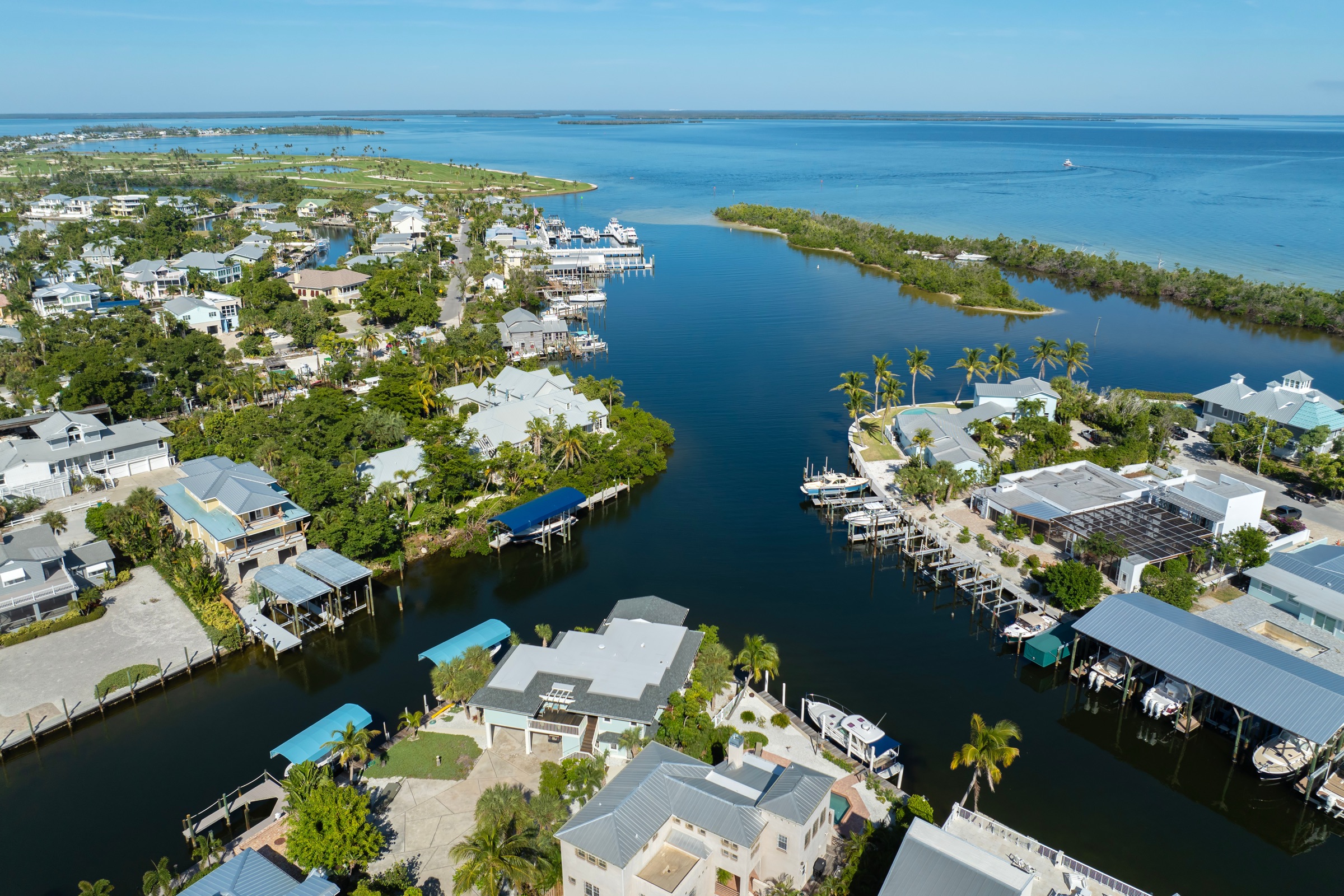
Every waterfront corridor on Gasparilla Island has a different bottom. The rough character of each, as a starting orientation only — never as a substitute for a survey of the specific dock you are buying:
| Corridor | Typical depth at MLW | Realistic max boat length |
|---|---|---|
| Gulf-front (open pass access) | 6–12 ft | 60+ ft |
| North Bay / harbor-front | 5–8 ft | 45 ft |
| Cole’s Bayou / south end | 4–6 ft | 36 ft |
| Interior canals (Wheeler Rd area) | 3–5 ft | 28 ft |
Why this matters: the most expensive mistake I see on this island is a buyer who chooses a home for the view and only afterward learns the water in front of it will not float the boat they already own. Correcting that mistake usually means selling — at whatever the market gives you, on someone else’s timeline. Dock depth is not a detail; it is the ceiling on your boat program and, therefore, on your resale.
Ask for a hydrographic survey, not the seller’s word. Order one on any waterfront home you are serious about; local marine survey firms in Punta Gorda and Placida do this routinely, and the cost is trivial against the size of the decision.
2. The April 2026 NFIP change — and what it did to premiums here
The National Flood Insurance Program’s Risk Rating 2.0 methodology, which FEMA finalized for policy renewals on April 1, 2026, changed how premiums are calculated for older Boca Grande homes. Under Risk Rating 2.0, premiums reflect the individual property — elevation, distance to water, replacement cost, flood frequency — rather than the flood-zone label alone, and older pre-FIRM homes that were previously subsidized generally move toward their full risk-based rate over successive renewals, subject to the annual increase caps set in statute. I have seen meaningful increases on older cottages here. What that means for a specific house is knowable only from that house’s current policy.
Two things follow from this:
- Get the current NFIP declarations page before you offer. Not the “assumable” number the seller quotes from 2023.
- Elevation certificates now matter more than they used to. A home elevated meaningfully above base flood elevation is a better risk, and better risks are what the private market wants. Get an elevation certificate and let a broker shop it — private carriers sometimes price below NFIP for a well-elevated home, sometimes not. Compare the two actual quotes rather than assuming a spread.
Primary source: FEMA Risk Rating 2.0 methodology.
3. The Historic District rules that catch every out-of-market buyer
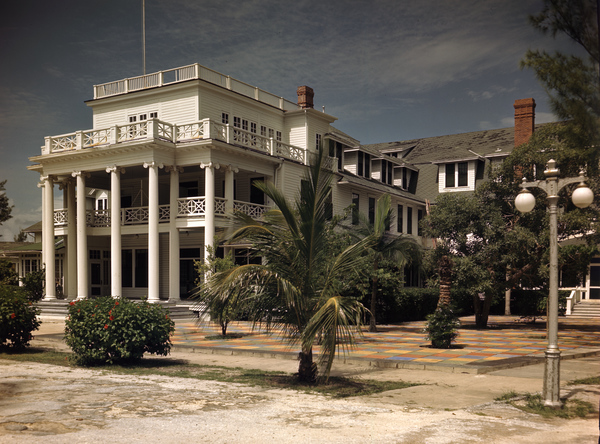
The Boca Grande Historic District is listed on the National Register of Historic Places and covers much of the village core. Whether a given address falls inside it is a question you should answer from the county’s mapping before you write an offer, not from a listing remark. Exterior alterations inside the district go through Lee County’s historic review process.
In practice, that means:
- No changing rooflines, window openings, or exterior cladding without approval. Build the review calendar into your schedule; it is not a same-month process.
- No demolition of contributing structures. I have watched buyers walk from otherwise perfect homes once they learned the old cottage they wanted to raze was classified as contributing.
- Additions must match scale and setback. Historic-appropriate exterior work costs more than the equivalent non-historic build. Have your architect and builder price your actual scope rather than applying a per-square-foot rule of thumb.
If you want to gut-renovate, buy outside the district. If you want a piece of the village, embrace the review process — it protects your resale.
Primary source: Lee County Historic Preservation.
4. Off-market is not a myth here — it’s the default
Gasparilla Island is a small barrier island with a limited number of residential parcels and, at any given moment, a short public listing sheet. That scarcity plus a genuinely private ownership base means some homes trade without ever being publicly marketed. Owners here often don’t want strangers walking through. Some have security concerns. Some are simply private.
I am not going to put a percentage on that, because no one can verify one. What I can tell you is that the public sheet on this island is short enough that missing even one home matters, and that being known to the local listing agents is how you hear about a house early.
The practical implication: treat a portal-only search here as a partial view. I keep a private buyer list and share what I am seeing with it. There is no cost to be on it.
How I actually work with waterfront buyers
I take on a small number of buyer clients per year. Here’s the workflow:
- 30-minute discovery call. We talk about the boat, the dock, the school situation, the tax posture, the flight from your primary home.
- Private inventory shared inside 72 hours. Both MLS-eligible and off-market. Every listing includes my honest read on the dock, the insurance exposure, and the historic-district status.
- On-island tour day. Typically 4–7 homes. I drive. We stop at Sisters or The Loose Caboose. You get to see the island the way a resident sees it.
- Written offer strategy before we write. Comparable closings, days-on-market patterns, seller motivation reads.
- Closing. I coordinate hydrographic survey, elevation certificate, insurance shop, and — if you want — a captain’s sea trial from the dock.
You keep decision authority at every step. I bring the ground truth.
Neighborhoods, in one paragraph each
Gilchrist Avenue — the storybook oak-canopied stretch north of the village. Historic District, the tightest inventory on the island, and the deepest emotional pull. Typically the top of the market.
North Bay — quieter, harbor-facing, generally better boat depth than the Gulf side. Where most of the serious anglers I know end up.
Boca Bay — gated, with tennis, marina and pool amenities and newer construction. Buyers who want turnkey.
South End (Cole’s Bayou / near the lighthouse) — sunsets, tarpon, walking distance to the pass. Older homes, mixed lot quality.
Interior canal (Wheeler Road area) — the entry point to Boca Grande waterfront. Shallower water, smaller boats.
I have deliberately not published a median price for each of these. On an island this small, a neighborhood “median” can rest on two or three sales and will mislead you. Ask me for the actual recent comparables in the corridor you care about, or pull recorded sales yourself from the Lee County Property Appraiser.
What Boca Grande is not
It is not Naples. There is no five-story anything. There is no valet parking. The nearest full-service grocery is a 25-minute drive back over the causeway to Placida. If those absences read as flaws to you, you’ll be happier down the coast. If they read as the whole point, welcome. You’ll fit here.
FAQ
Q: What’s the price range for Boca Grande waterfront homes? Boca Grande waterfront spans a very wide range, from interior canal homes without deep-water dockage at the entry end to Gulf-front estates at the top. Because the island is small and closings are few, published averages are easily distorted by one or two sales. For current figures, ask your agent for the most recent comparable closings out of the MLS, or look up recorded sales and assessed values through the Lee County Property Appraiser.
Q: How deep are Boca Grande canals? Depths vary sharply by corridor. Gulf-front and pass-adjacent docks run 6–12 feet at mean low water. North Bay runs 5–8 feet. Interior canals in the Wheeler Road area typically run 3–5 feet — enough for a 26–28 foot center console, not enough for most sportfish. Always order a hydrographic survey.
Q: Is flood insurance available for Boca Grande waterfront homes in 2026? Yes. Coverage is available through the NFIP and through private-market carriers. FEMA prices NFIP policies under its Risk Rating 2.0 methodology, which weighs the individual property’s characteristics rather than the flood-zone label alone, so older pre-FIRM homes have generally seen premiums move toward their full risk-based rate over successive renewals. Do not rely on a premium quoted by a seller from an earlier year — get the current declarations page and have a broker quote private alternatives alongside the NFIP number.
Q: Can I renovate a historic Boca Grande home? Yes, with restrictions. Homes inside the Boca Grande Historic District require Lee County review for exterior changes, and demolition of “contributing” structures is heavily restricted. Interior renovations are generally unrestricted. Build the review timeline into your schedule and expect historic-appropriate exterior work to cost more than a comparable non-historic build — have your architect price your actual scope. Confirm the current process directly with Lee County.
Q: Do I need a Boca Grande broker, or can I work with a Sarasota or Naples broker? You can work with any Florida-licensed agent. The practical argument for an island-based broker is that Boca Grande is a small, private market where some owners prefer not to list publicly, so relationships with the handful of local listing agents affect what you get shown. Ask any agent you interview directly how they source inventory here.
Ready to see the real inventory?
If you’re serious about a Boca Grande waterfront home in the next 12 months, book a 30-minute discovery call with me. No pressure, no drip campaign — we’ll go through what’s actually available that fits your profile, and I’ll tell you honestly where the market is instead of quoting you a statistic.
Book a private Boca Grande waterfront call →
Sabatino Campilii is the licensed Florida REALTOR® (SL3363040) behind OceanFL, a private-clientele real estate practice serving Boca Grande and greater Charlotte Harbor.
Internal links:
- Boca Grande neighborhoods overview
- About OceanFL
- Recent closings
- Contact / private buyer list
- Charlotte Harbor waterfront guide
External authoritative links:
Sabatino can answer it in five minutes — no pressure, no listing-agent spin.

Realtor®, License SL3363040
25-year builder, developer, and licensed Realtor® representing buyers and sellers across the Southwest Florida Gulf-coast pockets. Reviewed and published July 23, 2026.
Frequently asked
Q: What's the price range for Boca Grande waterfront homes? +
Boca Grande waterfront spans a very wide range, from interior canal homes without deep-water dockage at the entry end to Gulf-front estates at the top. Because the island is small and closings are few, published averages are easily distorted by one or two sales. For current figures, ask your agent for the most recent comparable closings out of the MLS, or look up recorded sales and assessed values through the Lee County Property Appraiser.
Q: How deep are Boca Grande canals? +
Depths vary sharply by corridor. Gulf-front and pass-adjacent docks run 6-12 feet at mean low water. North Bay runs 5-8 feet. Interior canals in the Wheeler Road area typically run 3-5 feet - enough for a 26-28 foot center console, not enough for most sportfish. Always order a hydrographic survey.
Q: Is flood insurance available for Boca Grande waterfront homes in 2026? +
Yes. Coverage is available through the NFIP and through private-market carriers. FEMA prices NFIP policies under its Risk Rating 2.0 methodology, which weighs the individual property's characteristics rather than the flood-zone label alone, so older pre-FIRM homes have generally seen premiums move toward their full risk-based rate over successive renewals. Do not rely on a premium quoted by a seller from an earlier year - get the current declarations page and have a broker quote private alternatives alongside the NFIP number.
Q: Can I renovate a historic Boca Grande home? +
Yes, with restrictions. Homes inside the Boca Grande Historic District require Lee County review for exterior changes, and demolition of contributing structures is heavily restricted. Interior renovations are generally unrestricted. Build the review timeline into your schedule and expect historic-appropriate exterior work to cost more than a comparable non-historic build - ask your architect and contractor to price it for your specific scope rather than relying on a rule of thumb. Confirm the current process directly with Lee County.
Q: Do I need a Boca Grande broker, or can I work with a Sarasota or Naples broker? +
You can work with any Florida-licensed agent. The practical argument for an island-based broker is that Boca Grande is a small, private market where some owners prefer not to publicly list, so relationships with the handful of local listing agents affect what you get shown. Ask any agent you interview directly how they source inventory here.
Have Sabatino represent you — before you call any listing agent.