Preparing a Coastal Home for the Market
Most sellers work hard on the wrong things in the wrong order. They repaint a bedroom that nobody will remember, then photograph the house with a pool cage full of leaves and a lanai stacked with hurricane shutters. The effort was real. The return was not. Buyers trading up from this home into a second Florida property should review our second-home financing basics in Florida, since the lending rules differ from a primary-residence mortgage.
Preparing a coastal Florida home for sale is a sequencing exercise. Do things in the right order and each step makes the next one cheaper. Do them out of order and you will pay twice.
Sequence Matters More Than Effort
Here is the order that works:
- Diligence first. Find out what is actually wrong with the house before you decide what to fix. That usually means a pre-listing inspection, and on the coast, a wind mitigation inspection too.
- Repairs second. Fix the things that will surface in a buyer’s inspection anyway, plus the things that read as neglect.
- Removal third. Declutter and depersonalize. This is the highest-return, lowest-cost step, and it must happen before staging or photography.
- Cosmetics fourth. Paint, hardware, light fixtures, mulch.
- Cleaning fifth. Deep clean, including the parts nobody cleans.
- Documentation sixth. Assemble the paperwork that answers buyer questions before they are asked.
- Photography last. Always last.
The most common failure is doing cosmetics before diligence — repainting a ceiling and then discovering during the buyer’s inspection that the roof above it needs work, which means the ceiling gets opened and repainted again.
Repairs Buyers Notice Immediately
A pre-listing inspection tells you what a buyer’s inspector will find. You do not have to fix everything on it, but you should know all of it, because in Florida you will be disclosing known material defects, and a surprise mid-inspection costs far more in negotiation than the repair would have cost outright.
The items that move a buyer’s read of a coastal home most:
- Roof. Nothing dominates a Florida buyer’s thinking more, because insurance underwriting follows roof age and condition. If yours is aging, get a licensed roofer’s written evaluation. Knowing whether you have a repair or a replacement, in advance, lets you price and negotiate deliberately instead of reactively.
- Any evidence of water. Ceiling stains, cabinet-bottom swelling, a bathroom exhaust fan that does not move air, a window with fogged glass between panes. Each of these reads to a buyer as “there may be more.”
- Soft spots and grout failure in tile floors, and any sagging in a lanai ceiling.
- Exterior metal. Rust bleed on fasteners, corroded hinges, a stained garage door bottom. Salt air makes this normal, which is exactly why buyers use it to estimate how attentively the home has been cared for.
- AC service history. A unit with documented annual service reads very differently than one with no records, even at the same age.
- Sliders and windows that stick. Cheap to service, and they get touched by every single visitor.
- Pool cage. Torn screens, rusted screws, a door that will not latch. Rescreening a panel is inexpensive; a shredded cage in a photo is not.
- Seawall and dock, on waterfront property. Cap cracks, voids behind the wall, loose dock boards and corroded hardware. A marine contractor’s letter documenting condition is a genuinely useful thing to hand a buyer.
Fix what is broken. Where something is aged but functional, document it honestly rather than disguising it. Disguised defects come back.
Decluttering and Depersonalizing
This is where the largest visible improvement per dollar lives, and almost nobody goes far enough.
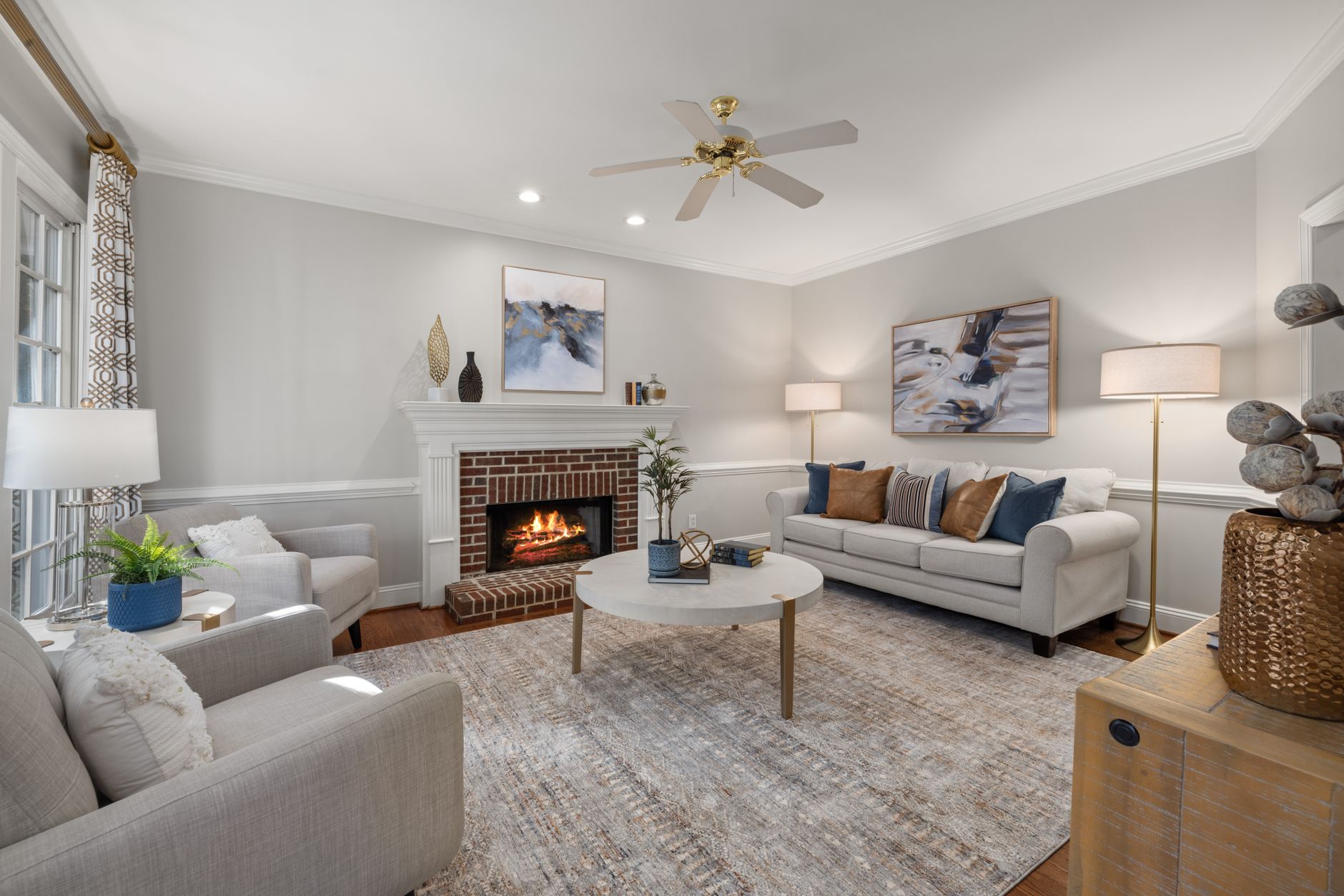
The working target is that every room should look like it has more space than it needs. Practically:
- Remove a third of the furniture, starting with anything against a wall that makes the wall shorter. Rooms photograph and feel larger with fewer, larger pieces than with more, smaller ones.
- Clear every horizontal surface except for one deliberate item. Kitchen counters especially — a coffee maker and nothing else.
- Empty closets to about half. Buyers open closets. A packed closet says “this house has insufficient storage” no matter how large it is.
- Take down family photographs, diplomas, mail, calendars and refrigerator magnets. Not because your family is unattractive but because buyers stop imagining themselves in a home the moment they start reading about someone else’s.
- Remove collections. Any group of more than three similar objects reads as a collection and pulls attention.
- Deal with the garage. It is the room sellers give up on and the room buyers use to judge how the house was maintained.
Rent a storage unit for the duration. It is cheaper than the price reduction that a cluttered house eventually requires.
Outdoor Living and Landscape Refresh
On the Gulf coast the outdoor space is not an amenity, it is a substantial share of what the buyer is purchasing. It should be presented at least as carefully as the kitchen.
- Pressure wash everything — driveway, walkway, pool deck, lanai, the north side of the house where mildew accumulates, and the roof only if a roofing professional confirms the method is safe for your material.
- Clean the pool to glass and run it before showings. A pool with a visible waterline scum ring undoes a great deal of other work.
- Fresh mulch and hard-edged bed lines. This is the single cheapest exterior improvement that reads as “well cared for.”
- Trim palms and limb up trees so the house is visible from the street and light reaches the windows. Overgrowth makes homes look smaller and darker.
- Stage the lanai as an actual room — a clean seating group, a table set simply, cushions that are not sun-bleached.
- Store the hurricane shutters and panels neatly and out of the frame, but do not hide them. Their existence is a selling point; a pile of them on the lanai is not.
- Dock and waterfront. Coil the lines, remove the mismatched buckets and old bumpers, wash the bird mess off the boards, and if there is a lift, make sure it operates. Buyers touring Gulf-access canal homes are evaluating the water side as seriously as the house side.
If salt-tolerant planting is part of the refresh, choose material that will still look right in a year — more in waterfront landscaping that survives the coast.
Cleaning Salt Film and Window Glass
Coastal homes acquire a haze that residents stop seeing. Buyers see it in the first ten seconds.
- Windows and sliders, inside and out, including the tracks. Salt film cuts light noticeably, and light is the thing every buyer says they want.
- Screens. Wash them or, if they are gray and brittle, replace them. Old screening dulls every photograph taken through it.
- Exterior light fixtures, house numbers, door hardware and hinges. Salt corrosion on brightwork is very visible up close, and the front door is where people stand while the lockbox is being opened.
- Ceiling fan blades and AC vent registers. Both collect dust and both appear in wide-angle photos.
- Baseboards and the tops of door casings.
- Every appliance interior, because buyers open them.
- Address any odor at the source, not with fragrance. Air fresheners in a Florida home read as concealment. Clean the drains, run the traps, replace the AC filter, wash the fabrics, and if there is a lingering musty smell, find out why before you list.
Documents to Assemble in Advance
A binder — physical or digital — that answers questions on the spot keeps momentum. Useful contents:
- Permits and closeout documentation for the roof, AC, water heater, electrical panel, windows, dock, seawall and any addition.
- Warranty documents for roof, appliances, AC and any transferable coverage.
- Recent utility bills, so a buyer can sanity-check operating cost.
- Service records for AC, pool and pest control.
- The wind mitigation report and, if applicable, a current four-point inspection.
- The elevation certificate if one exists.
- Association documents: budget, rules, meeting minutes, application procedures, current fee schedule, and any pending assessment.
- Survey.
- Any marine contractor evaluation of dock and seawall.
- Flood zone information from the FEMA flood map service center, and the property record from the county property appraiser.
Two notes. First, if a past improvement was done without a permit, talk to your closing attorney about it before listing; it is far better to have a plan than to discover it during a buyer’s title or permit search. Second, do not represent boundaries, flood zones or square footage from memory. Point buyers to the survey, the FEMA map and the property appraiser’s record. Those are the authorities, and they are free to check.
Getting Photo-Ready the Right Way
Photography is the last step because it captures the state of the house on the day it is taken, and that image is what most buyers will ever see.
- Shoot after all of the above is finished. Not “mostly finished.”
- Every light on, every lamp on, every ceiling fan off. Fans blur in long exposures.
- All window coverings open, unless a view is genuinely unattractive.
- Cars out of the driveway and off the street in front of the house. Trash bins out of sight.
- Pool clean and running; landscape watered so it looks alive.
- Time the exterior shots. East-facing fronts want morning; west-facing fronts want late afternoon. On the Gulf coast a west-facing waterfront home late in the day is your best single photograph, so plan around it.
- Ask about aerial photography for waterfront property. On a canal or harbor lot the water access is the value, and it can only be shown from above.
- Include the boring but decisive shots — the garage, the utility area, the dock at a normal water level, the street view. Buyers who cannot see something assume the worst about it.
The whole exercise adds up to one message: this house has been looked after. Everything above is just evidence for that claim, arranged in the order that makes it cheapest to prove.
Thinking about listing on the Gulf coast and want a walkthrough that tells you what is actually worth doing on your specific property? Reach out to Sabatino Campilii, Realtor®, License SL3363040.
Sabatino can answer it in five minutes — no pressure, no listing-agent spin.

Realtor®, License SL3363040
25-year builder, developer, and licensed Realtor® representing buyers and sellers across the Southwest Florida Gulf-coast pockets. Reviewed and published July 21, 2026.
Have Sabatino represent you — before you call any listing agent.