Sarasota vs Venice: Which Coastal Town Fits
Sarasota and Venice sit about twenty miles apart on the same stretch of Gulf coast, share a county, and get mentioned in the same breath constantly. They are not interchangeable. One is a small city with a genuine cultural infrastructure and the density that comes with it. The other is a compact coastal town built around a historic plan, with a walkable core and a slower tempo. Buyers who tour both usually feel the difference within an hour.
I’m Sabatino Campilii. My core market is the Charlotte Harbor and Gasparilla Island corridor to the south, and the Sarasota-Venice question comes up constantly with buyers working their way down the coast. Here is how I frame it.
Two Neighboring Towns, Different Tempos
Sarasota is the larger of the two by a wide margin and functions as the cultural anchor of this part of the coast. It has a real downtown with mid-rise density, a bayfront, a performing arts calendar that runs all season, museums, a substantial restaurant scene, and the barrier-island geography — Lido Key, Longboat Key, Siesta Key — that draws visitors from everywhere. It also has the traffic, the construction, and the crowding that come with being the place everyone wants to be.
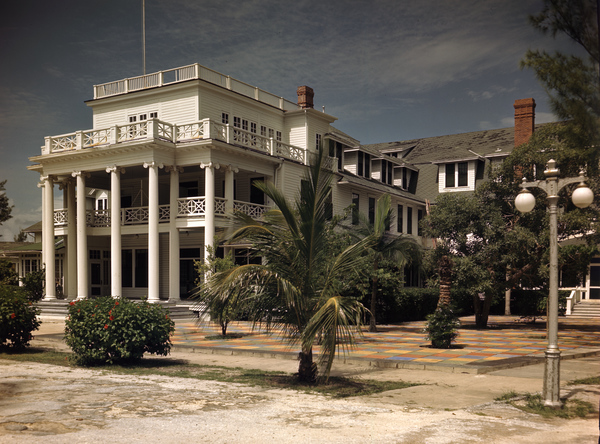
Venice is smaller and organized very differently. Its historic downtown sits on Venice Island, the section of the city separated from the mainland by the Intracoastal Waterway, and it was laid out in the 1920s under a plan by the city planner John Nolen with a consistent Northern Italian Renaissance architectural theme. That plan is still legible: wide landscaped avenues, low building heights, a compact main street, and beaches a short distance from the downtown core. The tempo is noticeably slower, the scale noticeably smaller.
Neither is a compromise version of the other. They are different products, and the right answer depends almost entirely on whether cultural density or quiet coherence is the thing you are optimizing for.
Scale, Density and Traffic Patterns
Sarasota’s advantages and disadvantages are the same fact viewed from two angles: it is a small city, not a town.
Downtown Sarasota has genuine density — mid-rise residential, a concentrated commercial core, and the Ringling Bridge connecting the mainland to St. Armands Key and Lido Key. That density supports the amenities, and it also produces the traffic. In peak season, the corridors onto the barrier islands and the main north-south arteries carry real congestion, and the drive to Siesta Key or Lido on a busy weekend is an exercise in patience. If you are buying in Sarasota, understand which side of a bridge or a bottleneck your property sits on, because it will determine your daily experience more than the house will.
Venice is compact enough that most of it is within a short drive of everything else in it. The island core is small, the mainland sections extend east and south, and traffic exists in season but at a different order of magnitude. The trade is that Venice does not generate its own big-city amenity set — for that you drive north, and in season that drive is not fast.
Both cities are served by the general Sarasota County road network, and both feel the seasonal swing. The practical planning question is the same one I ask buyers everywhere on this coast: where do you need to be on a regular basis, and what does that trip look like in February rather than in August?
Walkability and Downtown Character
Sarasota’s downtown is walkable in the true sense — you can live in the core and reach restaurants, the bayfront, cultural venues, and daily services on foot. St. Armands Circle, across the Ringling Bridge, is its own walkable node of shops and dining with beach access nearby on Lido Key. For a buyer who wants to give up the car for large parts of the week, Sarasota is the stronger of the two.
Venice’s walkability is different in character and, within its footprint, excellent. The downtown grid on the island is compact, low-rise, shaded, and pleasant to move through on foot or by bicycle. The architectural consistency from the original plan gives it a coherence that most Florida downtowns lack entirely. The Legacy Trail, a rail-trail corridor running between Venice and Sarasota, adds a genuine long-distance cycling and walking route that both cities connect to — a real amenity and one that a lot of buyers do not learn about until after they arrive.
The distinction is scope. Sarasota gives you a walkable urban core with everything a city offers. Venice gives you a walkable small-town core with a fraction of that inventory but far more calm.
Beaches and Shoreline Access
Both cities have excellent Gulf beach access, with different personalities.
Sarasota’s beaches are on its barrier islands. Siesta Key is widely known for its unusually fine, bright quartz sand and is heavily visited. Lido Key sits closer to downtown and is reached via the Ringling Bridge and St. Armands. Longboat Key extends north, longer and lower density. These are destination beaches, which means they are wonderful and they are busy, and parking in season is its own discipline.
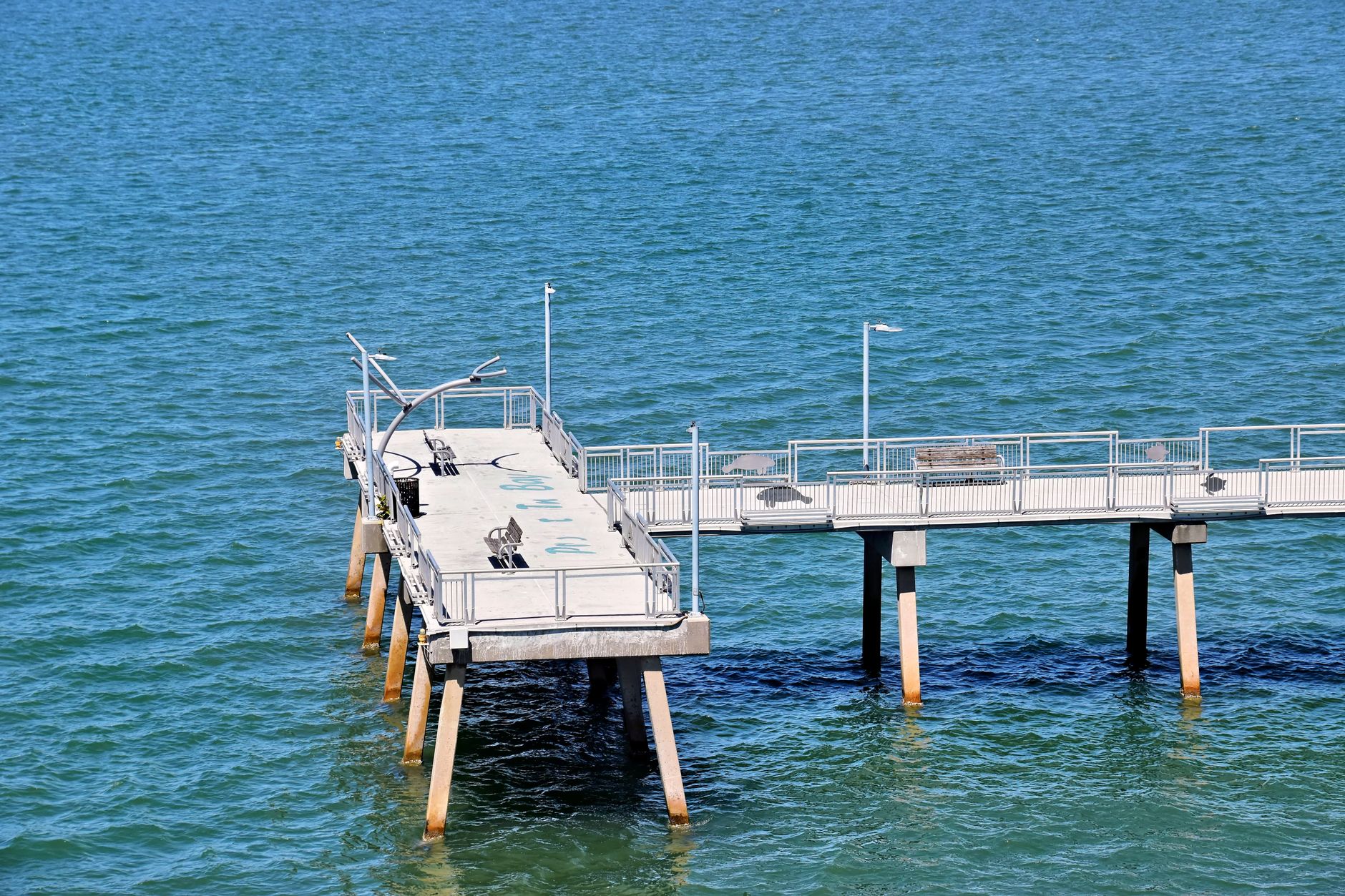
Venice’s beaches are closer to town and generally quieter. Venice Beach sits near the downtown core, Caspersen Beach lies south of it and is more natural and less developed, and the area is well known among visitors for fossil shark teeth found in the sand — a genuinely distinctive local pastime that draws people specifically for it. The Venice Fishing Pier is a fixture. The overall feel is a working local beach rather than a destination beach.
If beach proximity is a primary driver, Venice generally delivers shorter, simpler access from more of its housing stock. If you want the specific character of Siesta or Lido, that is Sarasota and no substitute exists.
Buyers who want boating access rather than beach access should evaluate both cities on the water side separately — bridge clearances, run to the Gulf, and dockage availability differ meaningfully by neighborhood, and the framework for that is the same one I lay out in buying a home with a boat slip or marina rights.
Cultural and Dining Options
This is Sarasota’s clearest advantage and the single most common reason buyers choose it.
Sarasota supports a cultural infrastructure unusual for a city its size: the Ringling estate and its museum complex, an opera company, a symphony, professional theater, the Van Wezel Performing Arts Hall on the bayfront, Marie Selby Botanical Gardens, and a full season of visiting programming. The dining scene is correspondingly deep and varied, concentrated downtown, on St. Armands, and scattered through the surrounding neighborhoods.
Venice has an active local arts community, a theater, seasonal events, and a good but far smaller restaurant scene concentrated in the downtown core. It is a town that supports its own cultural life rather than one that draws a regional audience.
The honest way to weigh this is to ask how often you actually attend things. Buyers routinely overvalue proximity to cultural institutions they will visit four times a year, and undervalue the daily experience of the street they will live on. If you are a genuine season-ticket household, Sarasota. If you go occasionally, Venice with a drive north is entirely workable.
Housing Stock and Neighborhood Types
Sarasota’s inventory is the broader and more varied of the two. Downtown mid-rise condominiums, historic near-downtown neighborhoods with mature canopy, mainland single-family neighborhoods of every era, barrier-island properties from modest to extraordinary, and master-planned communities east of the city. That range means Sarasota can serve almost any buyer profile — but it also means the label “Sarasota” tells you very little on its own, and neighborhood selection does all the work.
Venice’s stock skews toward single-family homes and low- to mid-rise condominiums, with a meaningful concentration of established communities and a strong presence of deed-restricted and age-restricted developments on the mainland side. The island core holds older homes with real character. New development has been substantial on the eastern side of the city in recent years, which is where much of the newer inventory sits.
In both cities the diligence checklist is the same and it matters: verify the flood zone for the specific parcel on the current FEMA map, check the parcel record and tax bill with the Sarasota County property appraiser and tax collector, confirm what community association or district obligations attach, and get insurance quotes for the specific property before you are committed. The governance layer alone can change carrying cost substantially — see understanding HOA and CDD structures for how those obligations stack.
Anyone comparing this part of the coast against markets further south should also read Naples versus Sarasota waterfront homes, which takes the comparison in the other direction.
Choosing the Tempo You Want
When buyers ask me to reduce this to a single question, it is this: do you want to be in a city that happens to be on the water, or in a coastal town that happens to have a downtown?
Sarasota is the city. You get density, culture, range of inventory, and the best restaurant and arts calendar on this part of the coast, and you accept traffic, crowding, and the need to choose your neighborhood carefully.
Venice is the town. You get coherence, walkability at a human scale, quieter beaches, and shorter daily logistics, and you accept a smaller amenity set and a drive when you want more.
A few practical suggestions before deciding. Visit both in peak season, not only in the quiet months, because the seasonal swing here is dramatic and the version you tour in September is not the version you will live in February. Drive the routes you would actually drive — to the grocery store, to a hospital, to the airport. Walk the downtown of each on an ordinary weekday evening. And in both cases, narrow to a specific neighborhood before forming an opinion about the city, because within each of these places the variation between neighborhoods is larger than the variation between the two cities.
If you want an outside read on which of these fits how you actually intend to live — or how either compares to the Charlotte Harbor and Boca Grande markets to the south — reach out and we’ll talk it through. For families weighing the whole coast at once, our guide to the best beach towns in Florida for families puts Venice alongside Englewood, Cape Haze, Nokomis and Boca Grande.
Sabatino can answer it in five minutes — no pressure, no listing-agent spin.
Realtor®, License SL3363040
25-year builder, developer, and licensed Realtor® representing buyers and sellers across the Southwest Florida Gulf-coast pockets. Reviewed and published July 18, 2026.
Have Sabatino represent you — before you call any listing agent.