The short answer
- —Gasparilla Island is reached by one road: the Boca Grande Causeway from Placida, owned and tolled by the Gasparilla Island Bridge Authority (GIBA).
- —GIBA publishes its toll schedule directly. Cars, pickups and motorcycles pay $6.00 at the cash or non-frequent-user card rate, $3.90 at the frequent-user card rate, or $780.00 for an annual pass.
- —GIBA states it receives no federal, state or county tax funding and operates entirely on toll and user-fee revenue — which is why the toll exists at all.
- —The causeway includes a swing bridge over the Intracoastal Waterway, so vessel openings can add unpredictable minutes to a crossing.
- —For a second-home buyer, access is a recurring cost and a scheduling constraint for contractors, cleaners and guests. Price it before you buy, not after.
Boca Grande Causeway tolls and island access cost $6.00 cash per car, pickup or motorcycle, $3.90 with a frequent-user card, and $780.00 for an annual pass, per the Gasparilla Island Bridge Authority. The tolled Placida causeway is Gasparilla Island’s only road on or off the island, and its swing bridge can add unscheduled minutes to a crossing.
How much do Boca Grande Causeway tolls and island access cost?
Per GIBA’s published toll rate sheet:
- Cars, pickup trucks and motorcycles — cash or non-frequent-user card: $6.00
- Cars, pickup trucks and motorcycles — frequent-user card rate: $3.90
- Annual pass: $780.00
- Trucks, buses, commercial vehicles and trailers: $5.50 per axle
- Bicycles: $3.00
The tolled causeway from Placida is the only road on or off Gasparilla Island, which makes island access one of the few ownership costs on this coast you can price to the penny before you commit.
Ask a Boca Grande owner what makes the island what it is and you will rarely hear about the architecture. You will hear about the causeway. One tolled road, one swing bridge, one way on and off — that single fact shapes traffic, density, contractor availability, guest patterns and, indirectly, price. Whichever side of the island you choose, access runs through the same crossing; we cover the water side of it in our how Boca Grande Pass compares to Gasparilla Sound guide.
This guide covers Boca Grande causeway tolls and island access in full: what they cost, how the crossing works, and the primary sources you can check yourself. It is written for buyers, because access is the one island variable you can price exactly before you commit.
How do you get to Boca Grande?
Gasparilla Island is reached from the mainland by the Boca Grande Causeway, which runs from the Placida area of Charlotte County — near Cape Haze and Englewood — across the Intracoastal Waterway to the island. One road on, one road off: the causeway and its bridges are owned and operated by the Gasparilla Island Bridge Authority (GIBA).
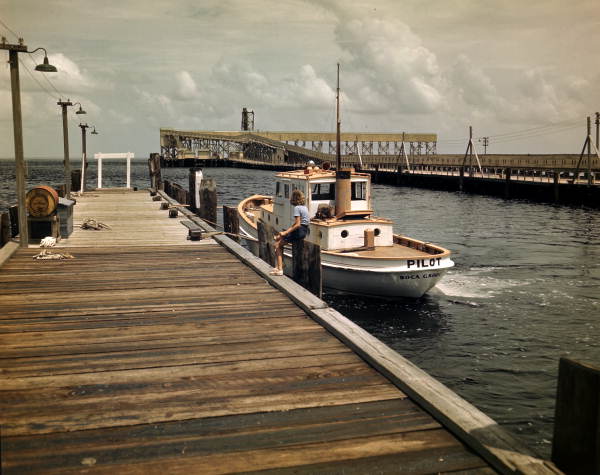
The crossing includes a swing bridge over the Intracoastal, which rotates open for vessel traffic rather than lifting. Openings are short, but from the driver’s seat they are unscheduled. If you have a flight, a closing, or a contractor with a two-hour window, build in buffer.
What are the full Boca Grande Causeway toll rates?
This is the number buyers most often guess at, so here it is from the source. GIBA publishes its schedule on its own toll rate sheet:
| Vehicle / pass | Rate |
|---|---|
| Cars, pickup trucks, motorcycles — cash or non-frequent-user card holder rate | $6.00 |
| Cars, pickup trucks, motorcycles — frequent-user card holder rate | $3.90 |
| Frequent-user card purchase minimum | $97.50 |
| Non-frequent-user card purchase minimum | $60.00 |
| Annual pass | $780.00 |
| Trucks, buses, commercial vehicles and trailers | $5.50 per axle |
| Bicycles | $3.00 |
Rates are set by GIBA and can change. Treat the published sheet as the authority, not this page.
One administrative detail that catches seasonal owners: GIBA’s FAQ states that bridge pass accounts expire one year from the date of your last purchase and any money remaining in the account will be forfeited. If you are on the island four months a year, that is a real consideration when you decide how much to load onto a card.
Frequent-user card or annual pass?
Straight arithmetic, using GIBA’s published rates:
- At the $3.90 frequent-user rate, an annual pass at $780.00 breaks even at 200 tolled crossings per year.
- Below that, the frequent-user card is cheaper; above it, the annual pass is.
- Before you run that number, confirm with GIBA how the toll is assessed on your account — the causeway has historically collected in the island-bound direction only, which means a round trip is billed once, not twice. That single detail doubles or halves your break-even, so get it in writing rather than assuming.
- A full-time resident crossing for errands several times a week can clear 200 tolled crossings. A seasonal owner on the island three months a year almost never does.
Run your own number against how you will actually live there, not how you imagine you will.
Why is there a toll at all?
Because the causeway is not tax-funded. GIBA states on its about page that no taxpayer federal, state or county taxes are used to pay for the GIBA roads and bridges, and that “if you do not use the GIBA causeway, you do not pay for it.”
That is worth understanding rather than resenting. A user-funded causeway is why the road exists, and the toll also functions as a density control — it filters casual day-trip traffic in a way a free bridge does not. Owners on Gasparilla generally count that as part of what they bought.
Boca Grande causeway tolls: quick answers
How much is the Boca Grande Causeway toll?
Cars, pickup trucks and motorcycles pay $6.00 cash or $3.90 with a frequent-user card; an annual pass is $780.00. Trucks, buses, commercial vehicles and trailers pay $5.50 per axle. GIBA’s published rate sheet is the authority.
Is the causeway the only way to get to Boca Grande?
For vehicles, yes. The tolled road from Placida across the Intracoastal swing bridge is the single access point on and off Gasparilla Island; bicycles cross at $3.00.
Do toll pass accounts expire?
GIBA’s FAQ states that bridge pass accounts expire one year from the date of your last purchase and remaining funds are forfeited — a real factor for seasonal owners deciding how much to load.
Which airports serve Boca Grande?
Gasparilla Island has no commercial airport. Practical arrival points for owners and guests are the Southwest Florida and Sarasota–Bradenton airports to the south and north, plus Punta Gorda’s regional field inland — each a drive of meaningful length, then the causeway.
For a primary residence, that is a manageable few times a year. For a part-time home you fly into monthly, or one you plan to have guests rotate through, it is a genuine variable. This is precisely the trade-off we run in Boca Grande vs Anna Maria Island, where easier airport reach is Anna Maria’s structural advantage, and in Boca Grande vs Sanibel Island, where both islands are tolled but Sanibel sits closer to a major airport.
What does island access mean for owning, not just visiting?
Access shows up in ownership in four places buyers underestimate:
Trades and service. Every contractor, roofer, landscaper, cleaner and appliance delivery crosses the same causeway, at commercial per-axle rates for larger vehicles. Some price the crossing and the drive into the bid; some are simply less available on the island than on the mainland. Expect a smaller pool of trades and less schedule flexibility than in Port Charlotte or Englewood.
Storm logistics. A single access point matters most on the days it matters most. Evacuation orders, bridge closures and post-storm re-entry protocols all run through one road. Note that the county line crosses Gasparilla Island: the Boca Grande village end is unincorporated Lee County, while Placida and the mainland approach are Charlotte County, which publishes its own flood information resources. Confirm which county issues re-entry credentials for your specific address, and know the plan before the season, not during it.
Guests and rentals. A tolled, single-point crossing shapes the kind of stay the island attracts — longer, quieter, more deliberate. That is consistent with the island’s seasonal, owner-use rental culture. If your plan depends on high-turnover nightly rental, the access pattern and the local rules are both working against it; see what a Gulf-coast luxury rental actually earns for the realistic version of that math.
Daily rhythm. Golf carts do a lot of the work on-island. Many owners keep a cart for village life and cross by car only when they need the mainland. That pattern is a genuine quality-of-life advantage — and it is also why the toll math above is worth doing honestly rather than assuming a worst case.
What should you check before you buy?
- Pull the current GIBA rates yourself and model your realistic annual crossings.
- Decide frequent-user card vs annual pass on your own numbers, and note the one-year account expiration.
- Ask your agent how the specific property’s contractor access and service history has actually worked.
- If you boat, understand the swing bridge and Intracoastal traffic near the causeway.
- Confirm flood zone and elevation at the address via FEMA’s Flood Map Service Center before you assume anything about insurability.
Access is the most quantifiable thing about island ownership. Almost everything else on Gasparilla — scarcity, quiet, community norms — resists a number. This one does not, so get it right.
If you are weighing the island against the mainland at the foot of its own causeway, Cape Haze vs Boca Grande and Boca Grande vs Englewood run those comparisons directly, and Cape Haze condos, townhomes and single-family homes covers the mainland ownership formats.
For the fuller picture of the island itself — not just what it costs to reach it — see Boca Grande homes and island living.
Where OceanFL fits. OceanFL is buyer-side. Sabatini Campilii represents you across Boca Grande, Cape Haze, Englewood and the Gasparilla corridor — including the unglamorous parts, like modeling what the causeway costs you over ten years of ownership. Start the conversation.
Sponsored by Ecolosophy. Small-batch, made with care. Match the kit to the way you will use the island: new owners setting up a Boca Grande kitchen reach for the bright, sunny Citrus Burst kit, while hosts preparing a calm guest room for family and visitors choose Unscented Oasis, a fragrance-free retreat for restful nights.
Sabatino can answer it in five minutes — no pressure, no listing-agent spin.

Realtor®, LoKation® Real Estate
25-year builder, developer, and licensed Realtor® representing buyers and sellers across the Southwest Florida Gulf-coast pockets. Reviewed and published August 2, 2026.
Have Sabatino represent you — before you call any listing agent.