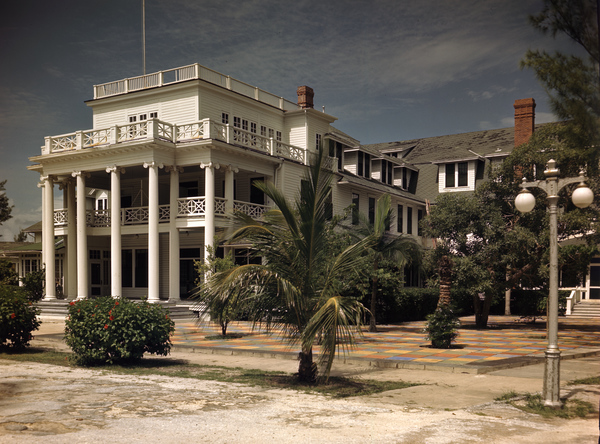
Boca Grande Rental Considerations for Owners
Most people who buy on Gasparilla Island are not buying an investment property. They are buying a place they intend to use, and then somewhere in year one or two the question surfaces: should we rent it when we are not here? It is a reasonable question with an unromantic answer, because renting on this island is governed by more layers of rule than almost anywhere else on this coast, and the operational reality is heavier than the brochure version.
I’m Sabatino Campilii. I work Boca Grande and the surrounding Charlotte Harbor market. This is the honest version of the conversation, written for owners rather than for anyone selling a management service.
Start by Verifying Local Rules
Before any conversation about rates, occupancy, or management, establish what you are actually permitted to do with the specific property you own. That is not a single answer — it is the intersection of several independent layers, and the most restrictive one governs.
The layers to check, in order:
Local government regulation. Gasparilla Island spans a jurisdictional boundary, and the island has zoning and land-use regulation that is genuinely specific to it, including its own historic and architectural review considerations in parts of the village. Rules affecting rentals — permitted use by zoning district, minimum stay requirements, licensing or registration obligations, occupancy limits, and parking requirements — vary by district and change over time. Verify the current rules for your parcel with the applicable local authority rather than relying on what a neighbor did five years ago.
State-level licensing and tax obligations. Renting residential property on a transient basis in Florida can trigger licensing requirements and both state and county-level tax collection and remittance obligations. The specifics depend on the length of stay and how the property is operated. This is a question for the state agency with jurisdiction and for your accountant — not something to infer from a listing platform’s onboarding flow.
Association or condominium documents. If your property is in a condominium or governed community, its recorded documents may prohibit rentals entirely, impose a minimum lease term, cap how many units may be rented at once, require board approval of tenants, or impose a waiting period after purchase. These can also be amended after you buy.
Deed restrictions attached to the parcel. Independent of any active association, recorded restrictions can run with the land.
I keep saying “verify” because the cost of guessing is not theoretical. A rental program built on a permission you do not actually have is a program that ends abruptly.
Association and Deed Restriction Layers
If your property is governed, read the actual recorded documents rather than a management summary. Look specifically for the rental article and any amendments to it, minimum lease terms, the approval process and its timeline, guest and occupancy limits, parking and vehicle rules, pet policy as applied to tenants, pool and amenity access for non-owners, and any registration or fee the association charges for rentals. Rental guests expect a well-maintained pool, so owners considering a rental program should read our waterfront pool home inspection guide before listing the property.
Also read the last year of meeting minutes. Rental policy is one of the most commonly amended provisions in Florida communities, and minutes will tell you whether a change is being discussed before it is adopted. If tightening is under consideration, that belongs in your planning.
If the property carries a boat slip or dock rights, check separately whether those rights extend to tenants at all. Many documents restrict dock use to owners. The general framework for verifying slip rights is in buying a home with a boat slip or marina rights, and the broader governance picture is in understanding HOA and CDD structures.
Self-Management vs Local Management
Once you know what is permitted, decide how it gets run. There are three realistic models.
Self-management from a distance. Cheapest on paper and the most demanding in practice. You handle marketing, inquiries, screening, contracts, tax remittance, payment collection, key or code handover, cleaning coordination, restocking, maintenance response, and guest issues. On an island where the tradespeople are busy and often booked, the maintenance response piece is the part that breaks. Self-management works when you have a genuinely reliable local person and a small number of long-stay tenants; it works poorly with frequent short turnovers.
Full-service local management. A management company handles bookings, guest communication, cleaning, inspections, maintenance dispatch, and often tax filings, for a percentage of revenue. On this island, local knowledge is the actual product: the value is in knowing which contractors show up, which cleaner works to standard, and how to handle a problem on a Sunday. Interview more than one, ask for owner references, and read the agreement closely — term length, termination rights, commission structure, what is billed separately, who holds funds, how maintenance is authorized and marked up, and whether the company books its own inventory ahead of yours.
Hybrid. You handle marketing and bookings; a local caretaker handles turnovers, inspections, and maintenance coordination. This suits owners who rent to a small returning group of tenants and want to keep control of who is in the house.
Whichever model you choose, someone competent needs to be on the island. Remote management with no local presence is where owner horror stories originate.
Furnishing and Presentation Standards
Boca Grande has a distinct aesthetic — restrained, coastal, unfussy, and old-line rather than glossy. Furnishing to that expectation matters more here than in a generic beach market, because the tenants this island attracts largely know it well and compare properties against a settled standard.
Practical guidance:
Furnish for durability first. Everything in a rental on a barrier island gets sand, salt air, sunscreen, and humidity. Performance fabrics, solid wood or quality rattan rather than veneered particleboard, and hardware that will not corrode within a season.
Keep the palette calm and the rooms uncluttered. Fewer, better pieces photograph better and survive longer than many small ones.
Get the fundamentals right before the decoration: reliable air conditioning and dehumidification, blackout capability in bedrooms, good beds and mattresses, sufficient towels and linens for full occupancy plus a spare set, a genuinely functional kitchen, and reliable internet.
Provide what island tenants actually use: beach chairs, umbrellas, towels, a cooler, and — this is Boca Grande — golf cart arrangements if the property and rules permit. Bicycles are heavily used here and heavily corroded by salt; budget for maintenance and eventual replacement.
Photograph the property properly once it is set, and keep the photographs current. Nothing generates complaints faster than a listing that is a year and one furniture change out of date.
Maintenance and Turnover Planning
The operating cost of a rental in a marine environment is meaningfully higher than the same house used personally, because the house is occupied more, cleaned more, and rinsed less by anyone who cares.
Build a schedule and fund it:
- Turnover cleaning to a written checklist, with periodic deep cleans
- Linen and towel rotation with a replacement cycle
- Quarterly interior inspection with photographs
- Air conditioning service at least twice yearly, plus filter changes between guests in heavy season
- Regular freshwater rinsing of exterior hardware, screens, cages, and outdoor equipment — the reasons and the routine are in salt air maintenance for coastal homes
- Pest control on a schedule
- Landscaping and irrigation maintenance
- Storm preparation protocol, including who executes it and how quickly, with written authority for them to act
Set aside a reserve for replacement, not just repair. Mattresses, upholstery, small appliances, outdoor furniture, and screens all wear on a predictable cycle in rental use. Owners who budget only for repairs end up with a property that degrades year over year without any single dramatic failure.
Keep an inventory list with condition notes and photographs, updated at least annually. It resolves disputes and it makes insurance claims far less painful.
Insurance and Documentation Adjustments
Renting changes your insurance position, and this is not a place to assume. Notify your carrier before you rent. A standard homeowner policy may not cover a property used as a rental, and coverage may be voided by undisclosed rental use. Ask specifically about liability coverage for tenants and guests, loss of rental income coverage, contents coverage for furnishings, and whether short-term versus long-term use changes the answer.
Confirm your flood coverage separately, and confirm that the flood zone information you are working from is current — check the FEMA flood map for the parcel rather than relying on an older elevation certificate or a prior owner’s description.
On the documentation side, keep: a written lease or rental agreement for every stay, a signed rules and liability acknowledgment, records of tax collection and remittance, maintenance and service records, the inventory with photographs, and any association rental registration. If you are using a management company, confirm in writing which of these they maintain and that you receive copies.
Finally, talk to your accountant before the first rental, not at tax time. Rental use changes how the property is treated, what is deductible, and what you must file. It can also interact with property tax exemptions, which is a genuinely consequential detail in Florida and one worth confirming with the county property appraiser for your specific situation.
Deciding If Renting Fits Your Goals
Work through four questions honestly.
Do the rules permit what you actually want to do? If the permitted minimum stay does not match your intended use pattern, the plan does not work regardless of the numbers.
Will renting cost you the use you bought the property for? The weeks tenants most want are frequently the weeks owners most want. Owners who block their own preferred dates and then rent the leftovers often find the economics much less compelling than the projection.
Do you have real local support? Without it, everything else is theoretical.
Are you comfortable with the wear? A rented house is a used house. Some owners are fine with that; some discover they are not, after the fact.
If the answers line up, a well-run rental on this island can work well — the demand is real and the tenant profile tends to be respectful of the place. If they do not line up, there is no shame in simply owning it and using it. That is what most people here do.
If you want a candid, non-promotional read on whether a specific Boca Grande property is a sensible rental — including which rule layers apply to that parcel — reach out and I’ll help you work it out.
Sabatino can answer it in five minutes — no pressure, no listing-agent spin.

Realtor®, License SL3363040
25-year builder, developer, and licensed Realtor® representing buyers and sellers across the Southwest Florida Gulf-coast pockets. Reviewed and published July 13, 2026.
Have Sabatino represent you — before you call any listing agent.