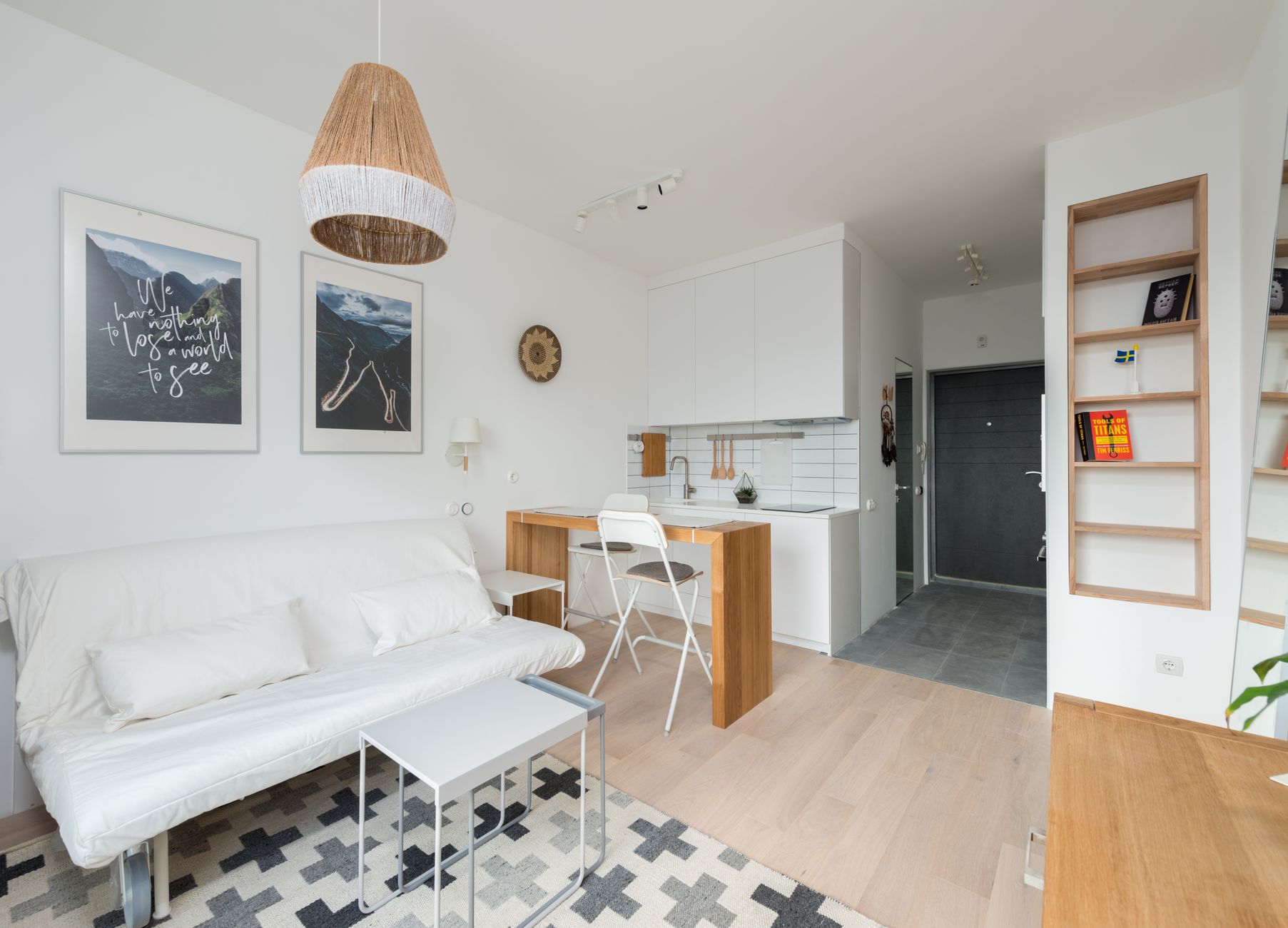
Downsizing to a Gulf Coast Coastal Home
Downsizing gets discussed as a math problem — fewer square feet, smaller bill. In practice it is a design problem, and the people who are happiest a year later are the ones who treated it that way. They did not just buy less house. They bought a differently shaped house, matched to how they actually intend to spend their days on the Gulf coast.
I have walked a lot of these purchases through Punta Gorda, Rotonda West, Placida, Englewood and the Cape Haze corridor. Here is what separates a clean downsize from a regretted one.
Right-Sizing Without Regret
The instinct is to subtract. Four bedrooms becomes two. Thirty-two hundred feet becomes seventeen hundred. Then in month three someone discovers there is nowhere to put a sewing table, nowhere for a grandchild to sleep that is not a sofa, and no wall long enough for the furniture they refused to part with.
A better method is to count rooms by use, not by name.
Walk your current home and, honestly, log which rooms you occupied in the last thirty days and for how long. Most people find they live in four spaces: a kitchen, one seating area, one bedroom, and one outdoor space. The formal dining room, the second living room and the guest suite that hosts twice a year are the square footage you are actually paying to heat, cool, insure and clean.
Then decide what to do about the twice-a-year uses deliberately rather than by accident:
- Guests. Is one flex room with a good sleeper adequate, or do you genuinely need a second true bedroom with a door and a closet? A second bedroom that hosts twelve nights a year is expensive. A hotel three miles away is not.
- Hobbies with footprint. Woodworking, quilting, fly tying, painting. These need a real place. If the plan is “the garage,” measure the garage, and remember that in Florida the garage is also where the water heater, the pool equipment and possibly the laundry live.
- Work. If either of you still works even part-time, a desk in a bedroom corner and a desk in a room with a closing door are very different experiences on a video call.
Right-sizing means removing what you do not use and protecting what you do. Blanket subtraction removes both.
Single-Level and Accessible Layouts
Most buyers downsizing on the Gulf coast want single-level, and they are right to. But “single-level” is not the same as accessible, and the difference matters more each year.
Things worth checking while you can still check them casually:
- Step-free entry. Many Florida homes, particularly elevated coastal construction, have a run of exterior stairs. Look for at least one entry that is level or ramp-able. If the home is on pilings, ask whether the structure was designed to accept an elevator later, and where it would land.
- Door widths and hallway turns. A 32-inch clear opening is the common threshold for a wheelchair or walker; older homes frequently have narrower interior doors, and hallway corners can defeat a wide door anyway.
- Bathroom geometry. A curbless or low-curb shower is dramatically easier to retrofit into a bathroom that already has one than to create in a small alcove tub surround. Check for blocking in the walls for future grab bars; if none, note that the walls can be opened during any renovation you are already doing.
- Laundry location. In-unit, on the main level, not down an exterior stair.
- Kitchen reach. Drawer bases instead of deep lower cabinets; a wall oven at counter height rather than a range with a low oven.
None of this requires buying a medical-looking house. Most of it is simply choosing a floor plan that will not need to be rebuilt in a decade.
Maintenance Load You Actually Want
This is the real variable on the coast, and it is the one people underestimate in both directions.
Coastal Florida is hard on buildings. Salt air corrodes fasteners, hardware, light fixtures, AC condenser coils and anything else made of metal that lives outside. Humidity finds every gap in the envelope. Sun destroys sealants, paint and pool cage screening. Landscaping grows aggressively for eight or nine months of the year. A pool needs weekly attention whether or not anyone swims. A dock and a seawall are marine structures with their own inspection cycle, which I get into in what riparian rights and waterfront ownership actually involve.
The question is not “how much maintenance is there?” It is “how much of it do I want to do, and who does the rest?”
Roughly, from lowest to highest owner burden:
- Condominium. The association handles the building envelope, roof, exterior and typically the grounds. You handle the interior. Lowest hands-on load, in exchange for the least control and an assessment you do not set.
- Villa or attached home in a maintenance-included association. Exterior paint, roof and lawn commonly handled; you own more of the structure than in a condo.
- Single-family in a deed-restricted community. Yours to maintain, but with standards enforced around you, which protects the street.
- Single-family, unrestricted, with pool and dock. Maximum freedom, maximum call list.
Whichever tier you choose, if you will be away part of the year, budget for a caretaker. Someone must run water through the traps, cycle the AC, check for leaks after storms, and confirm nothing is growing where it should not be. That is not optional in a humid climate.
Storage Realities in Smaller Coastal Homes
Florida homes are famously short on storage, and coastal ones more so. Basements do not exist. Attics exist but are brutally hot and unsuitable for anything that can warp, melt or grow — which is most of what people store. Elevated homes often have ground-level enclosed space, but in flood-prone zones that space is regulated and limited by design to non-habitable, non-critical uses; do not plan to convert it without checking with the building department first.
Practical consequences:
- Measure the closets. Not “does it have a walk-in” — how many linear feet of hanging rod exists in the whole house?
- Look at the garage seriously. Depth for a vehicle plus a workbench, plus wall height for overhead racks, plus whether the pool equipment and water heater already occupy a corner.
- Plan the purge before the purchase, not after. The single most useful thing a downsizer can do is start giving things away six months early. Moving companies charge to move what you will later pay to remove.
- Furniture scale. Large-scale furniture from a northern colonial rarely fits a Florida great room’s proportions. Some of it should be sold, not shipped.
Community Fit and Social Access
A downsize usually coincides with a change in daily rhythm. If your social life was previously built around a workplace, a congregation, or a neighborhood you had lived in for decades, moving 1,200 miles removes the scaffolding all at once. The community you choose has to supply some of it.
Things that genuinely predict how connected you will feel:
- Density of year-round residents. A street that empties in May is a different social environment than one where two-thirds of the homes are occupied all year. Ask.
- Walkability to something. A community where you can walk to a clubhouse, a pool, a dock, or a coffee shop generates spontaneous contact. A community where every trip requires the car does not.
- Organized activity that matches you. Golf, tennis, pickleball, boating, cards, a workshop. If a community’s social life is built entirely around one activity you do not do, you will feel it.
- Distance to real infrastructure. Hospital, urgent care, grocery, hardware store, airport. Charming remoteness is charming until it is a forty-minute drive at an inconvenient hour.
Spend an evening in the neighborhood, not just an afternoon. Neighborhoods behave differently after five o’clock.
Sequencing a Sale and a Purchase
The two-transaction problem has no perfect answer, only a set of tradeoffs.
- Sell first, then buy. Strongest negotiating position, cleanest financing, no double carry. Cost: you may need an interim rental and a storage unit, and you will be shopping under some time pressure.
- Buy first, then sell. Comfortable and unhurried. Cost: you are carrying two properties, and if the departure market softens, you carry them longer than planned.
- Contingent offer. Your purchase depends on your sale closing. Cost: sellers discount contingent offers, sometimes heavily, and in a competitive situation you may simply lose.
- Bridge financing. Available from some lenders; talk to yours early, because qualifying while carrying two mortgages is the constraint, not the willingness to lend.
Seasonality matters too — see the summer buying window for how timing affects negotiating position on both sides of the trade.
Which is right depends less on the market than on your own tolerance for temporary disorder. Be honest about that. A rental for four months is genuinely unpleasant for some people and completely fine for others.
Planning the Move Itself
A few things specific to moving into a coastal Florida home:
- Time the arrival of your belongings against the closing, not against your flight. Storage-in-transit is available and often the calmer choice.
- Get insurance bound before closing, and understand that wind and flood coverage may be separate from your homeowners policy. Start that conversation weeks ahead, not days.
- Set up the utilities and, if applicable, the association’s registration process early. Some communities require an application and approval before occupancy.
- Do not paint or renovate before living in the house through at least one full weather cycle. Light in Florida is different, and rooms you were sure needed changing sometimes do not.
Downsizing well is mostly a matter of deciding what the next chapter looks like in specific, boring detail, and then buying the house that fits it — rather than buying a smaller version of the house that fit the last chapter.
If you are thinking through a downsize anywhere from Punta Gorda to Englewood and want help matching floor plans and communities to how you actually live, reach out to Sabatino Campilii, Realtor®, License SL3363040.
Sabatino can answer it in five minutes — no pressure, no listing-agent spin.

Realtor®, License SL3363040
25-year builder, developer, and licensed Realtor® representing buyers and sellers across the Southwest Florida Gulf-coast pockets. Reviewed and published July 20, 2026.
Have Sabatino represent you — before you call any listing agent.