Gated Communities of Cape Haze and Rotonda
The stretch of Charlotte County between Placida Road and the Myakka watershed is one of the more misread pieces of Southwest Florida. From the highway it reads as a single continuous suburb. On the ground it is a patchwork of very different communities — some gated with staffed entries, some gated with a keypad and a swing arm, some deed-restricted with no gate at all — sitting within a few minutes of each other and priced accordingly.
I’m Sabatino Campilii. This corridor — Cape Haze, Placida, Rotonda West, and the pockets between them — is the approach road to Gasparilla Island, and it is where a lot of buyers land once they compare what the mainland offers against island pricing. Here is how the gated communities in this area actually differ.
The Corridor’s Gated Community Landscape
Geographically, this is a peninsula of low, flat land between Lemon Bay and the Myakka River, with Charlotte Harbor opening to the south and Gasparilla Island reachable by the Boca Grande Causeway. That geography drives everything about how the communities were built.
Rotonda West is the anomaly and the landmark. It was platted in the late 1960s and early 1970s as an enormous wheel — a circular road system with radial spokes, subdivided into named sections, and threaded with a system of freshwater canals used primarily for drainage rather than navigation. Rotonda is deed-restricted and governed by a community association, and most of its sections are open-access rather than gated. Within and adjacent to the wheel there are golf courses, and individual sub-associations with their own rules layered on top of the community-wide ones. Buyers frequently assume “Rotonda” is one homogeneous product. It is not: the sections differ in lot size, canal frontage, age of housing stock, and which sub-association governs them. Buyers whose search is really about the course more than the gate should also see our broader look at golf communities across Southwest Florida.
Cape Haze, by contrast, is the older-money side of the corridor — closer to the water, lower density, and containing several genuinely gated communities with private amenities and, in some cases, direct marina affiliations. Placida sits between them, with the working waterfront, the causeway, and a mix of condominium and single-family communities.
The practical point: within a ten-minute drive you can find a golf-course home in an open deed-restricted section, a staffed-gate community with a private marina, and a low-rise condominium with a boat slip on Gasparilla Sound. They are not substitutes for one another.
Entry, Security and Access Structures
“Gated” covers a wide range, and the difference affects both your daily life and your monthly assessment.
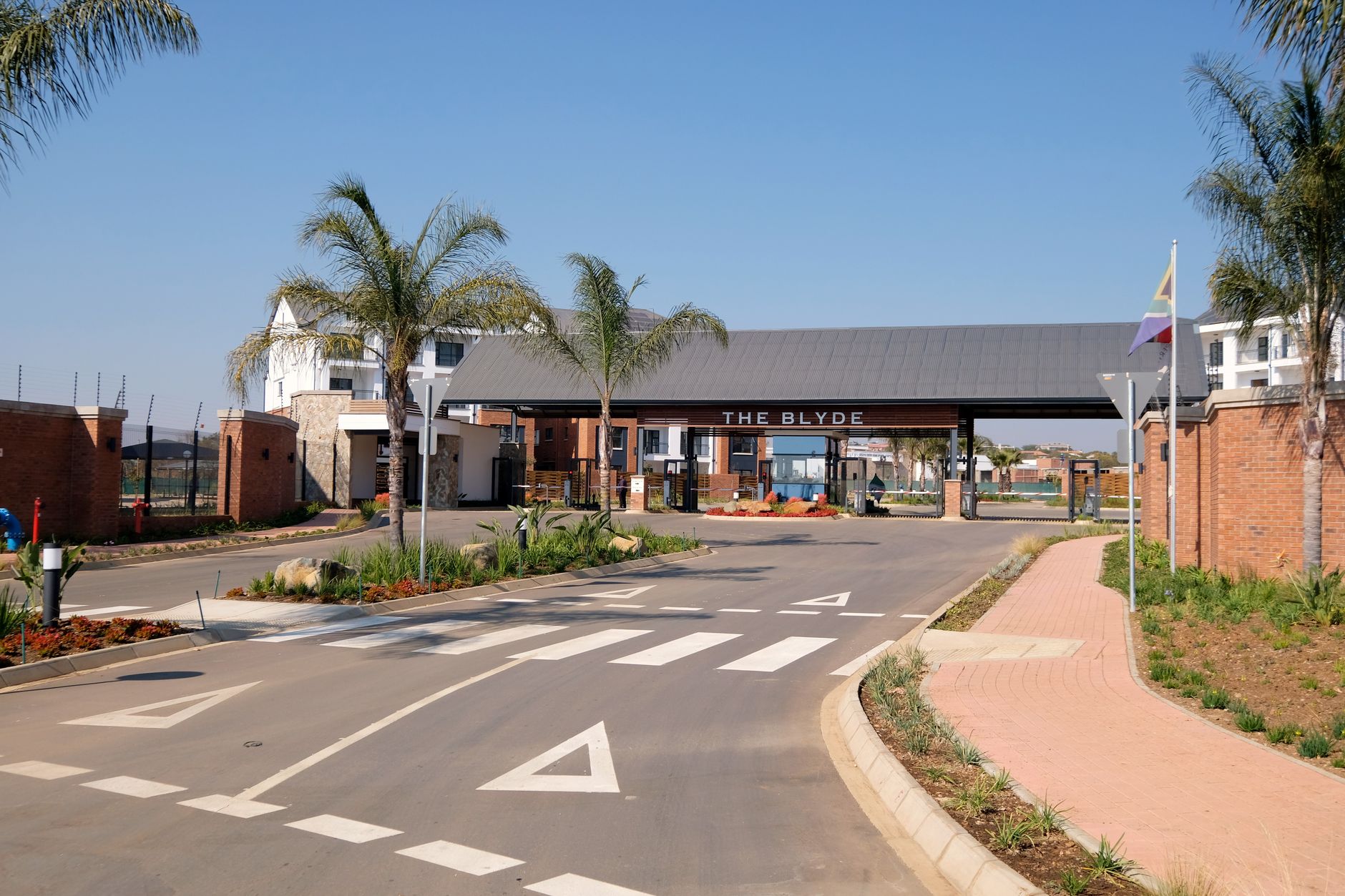
Staffed gate. A person in a gatehouse, sometimes around the clock, sometimes during posted hours. This is the most expensive arrangement to maintain and shows up in the budget accordingly. Ask what the posted hours actually are — a gatehouse staffed until 10 p.m. is a different product than one staffed continuously.
Unstaffed gate with resident credential. A transponder, code, or callbox system. Lower cost, still restricts casual through-traffic. Ask how guest access works, how vendors and contractors are admitted, and how many credentials come with the home.
Deed-restricted, ungated. No barrier at all, but recorded covenants governing appearance, use, and improvements. Plenty of well-maintained neighborhoods here fall in this category, and buyers who assume no gate means no rules are in for a surprise.
A gate controls traffic. It is not a security guarantee, and any association or agent who presents it as one is overselling. What a gate reliably does is reduce cut-through traffic, keep short-term visitors accountable, and — in some communities — control access to amenities so that they stay usable for residents.
Also worth asking: whether emergency services, mail carriers, and delivery services have reliable access, and how the gate operates during a power outage or a storm evacuation.
Amenity Sets You’ll Encounter
Amenities here cluster into recognizable packages, and each carries a cost structure.
Golf. Several courses operate in and around Rotonda and Cape Haze. The critical question is whether golf membership is bundled, optional, or entirely separate from the residential association — and whether membership is mandatory for homeowners in a given section. A mandatory golf membership is a recurring obligation that transfers with the property, and it belongs in your carrying-cost math from the start.
Community pool and clubhouse. Nearly universal in the gated communities here. Ask about the reserve funding for resurfacing, heating costs, and whether the clubhouse is rentable for private use.
Tennis, pickleball, and fitness. Increasingly common, and increasingly the amenity residents actually use daily. Pickleball courts also generate noise complaints; if you are buying adjacent to them, visit at a busy hour.
Nature trails and preserve areas. Much of this corridor abuts conservation land and mangrove shoreline. Preserve areas within a community reduce buildable density and are generally a long-term positive, but the association is often responsible for maintaining them.
Boat storage and launch. Dry storage racks, trailer lots, and small community ramps appear throughout the corridor. Availability is frequently waitlisted.
Marina and Boat Storage Affiliations
This is the corridor’s distinguishing feature and its most frequently misunderstood one. Placida and Cape Haze host working marinas and dry-stack facilities, and several residential communities have some form of affiliation with one. That affiliation can mean very different things:
- A deeded slip conveying with the home. The strongest form. It is real property, described in the deed, and it transfers at closing.
- An assigned slip through the association. Use rights allocated by the association, often by waitlist, often revocable or reassignable under the governing documents.
- A leased slip from a third-party marina. A contract, with a term, a rate, and no guarantee of renewal.
- Preferred access or discounted rates. Marketing language more than a property right. Verify what it actually entitles you to.
Because the difference between these is the difference between an asset and a courtesy, I wrote a longer piece on exactly what to verify: buying a home with a boat slip or marina rights. Read it before you pay any premium for a “boating community.”
Also confirm the water side of the equation, not just the paperwork: depth at the slip at low tide, the run from the slip to open water, and any fixed bridges in between. The relationship between the inland waters here and the passes out to the Gulf is covered in the Boca Grande Pass versus Gasparilla Sound piece.
Association Documents to Read Closely
Every gated community here comes with a document package, and your contract will give you a period to review it. Use the whole period. At minimum, read:
The declaration of covenants and restrictions. This is the governing instrument. It defines what you may build, park, rent, and change.
The current budget and the reserve study. Look at what is being reserved for and whether reserves are fully funded. Roofs, pool resurfacing, road repaving, gate systems, and seawalls are the big-ticket items. Underfunded reserves do not make a problem disappear — they convert it into a future special assessment.
Recent meeting minutes, ideally a year or more. Minutes are where you learn what the community is actually arguing about: insurance renewals, drainage, an amenity that needs replacement, litigation.
Insurance certificates. Confirm what the association’s master policy covers and where your individual policy has to pick up.
Rules and regulations, and any recent amendments. These change more easily than the declaration and often carry the restrictions that affect daily life.
Any pending or recent special assessments, and the estoppel information showing the seller’s account status.
If the community is also within a community development district, there is a second layer of obligation on top of the association. That structure is worth understanding in its own right, and I break it down in the HOA and CDD structures guide.
Resale Considerations Inside Gates
Gates and amenities cut both ways at resale. A well-run association with funded reserves and consistent standards protects value. A poorly run one — deferred maintenance, contentious governance, repeated special assessments — is a disclosure item every future buyer’s agent will find.
Rental restrictions deserve specific attention. Some communities here prohibit short-term rentals outright, some set minimum lease terms, some cap the number of rentals allowed at once, and some require association approval of tenants. If any part of your plan involves renting the property, verify the restriction in the recorded documents, not from a conversation. Restrictions can also be amended after you buy.
Pet limits, vehicle and boat-trailer parking rules, and restrictions on visible improvements — solar, generators, fencing, roof material and color — all belong on the same checklist.
Touring Several in One Day
The corridor is compact enough that you can see a meaningful cross-section in a single day, and that comparison is far more useful than seeing one community per visit weeks apart. A few things that make the day productive:
Start early and drive the roads between communities, not just within them, so you understand the commute to groceries, medical care, and the causeway. Visit at least one community at a busy hour and one on a quiet weekday. Look at the amenity buildings closely — the condition of a pool deck and clubhouse tells you more about the association’s financial discipline than the budget summary will. Ask each community what the current assessment is, what it was three years ago, and whether any special assessment has been discussed.
And be honest with yourself about which amenities you will use. A large amenity package you never touch is a monthly cost, not a benefit.
If you want a guided run through this corridor — including the communities that never make it into the general search results — get in touch and we’ll build a route around what you actually want out of the property.
Sabatino can answer it in five minutes — no pressure, no listing-agent spin.

Realtor®, License SL3363040
25-year builder, developer, and licensed Realtor® representing buyers and sellers across the Southwest Florida Gulf-coast pockets. Reviewed and published July 9, 2026.
Have Sabatino represent you — before you call any listing agent.