Understanding Water Depth at Your Dock
Buyers spend months on bridge clearances and minutes on depth. It should be the other way around. Air draft is a fixed, published number you can look up on a chart; you either fit or you do not, and you know before you buy. Depth is variable, unpublished at the parcel level, seasonal, and slowly changing — which means it is the constraint most likely to be discovered after closing.
A dock with insufficient water is not a boat slip. It is a place to sit. Here is how to find out which one you are buying.
Depth Is the Quiet Deal-Breaker
Canal depth in Southwest Florida is a product of how the canal was dredged decades ago, how much sediment has moved into it since, where the property sits along the canal’s length, and what the tide is doing at the moment you look. None of those variables appear in a listing.
The failure mode is specific and common: a buyer with a boat drawing three feet buys a home whose dock carries three feet at high water and eighteen inches on a hard winter low. The boat is fine most of the time and stuck some of the time, and “some of the time” turns out to include the mornings with the best fishing. Lifts help — a boat on a lift is out of the water at rest — but the boat still has to float in and out, and it still has to run the length of the canal to reach open water. Cape Coral’s canal network is the largest example of this in Florida, and our buyer’s guide to Cape Coral’s gulf-access canals covers depth and access lot by lot.
Depth also compounds with the route. A dock with plenty of water at the property is irrelevant if the canal mouth shoals. Measure both.
Measuring Depth the Right Way
The method is simple and nobody skips it twice.
Take soundings at low water, not at whatever time you happen to be standing there. Check the tide prediction for the nearest NOAA station and plan the visit for a low. If you can arrange a winter visit during a period of sustained north or northeast wind, better still — that is the honest worst case.
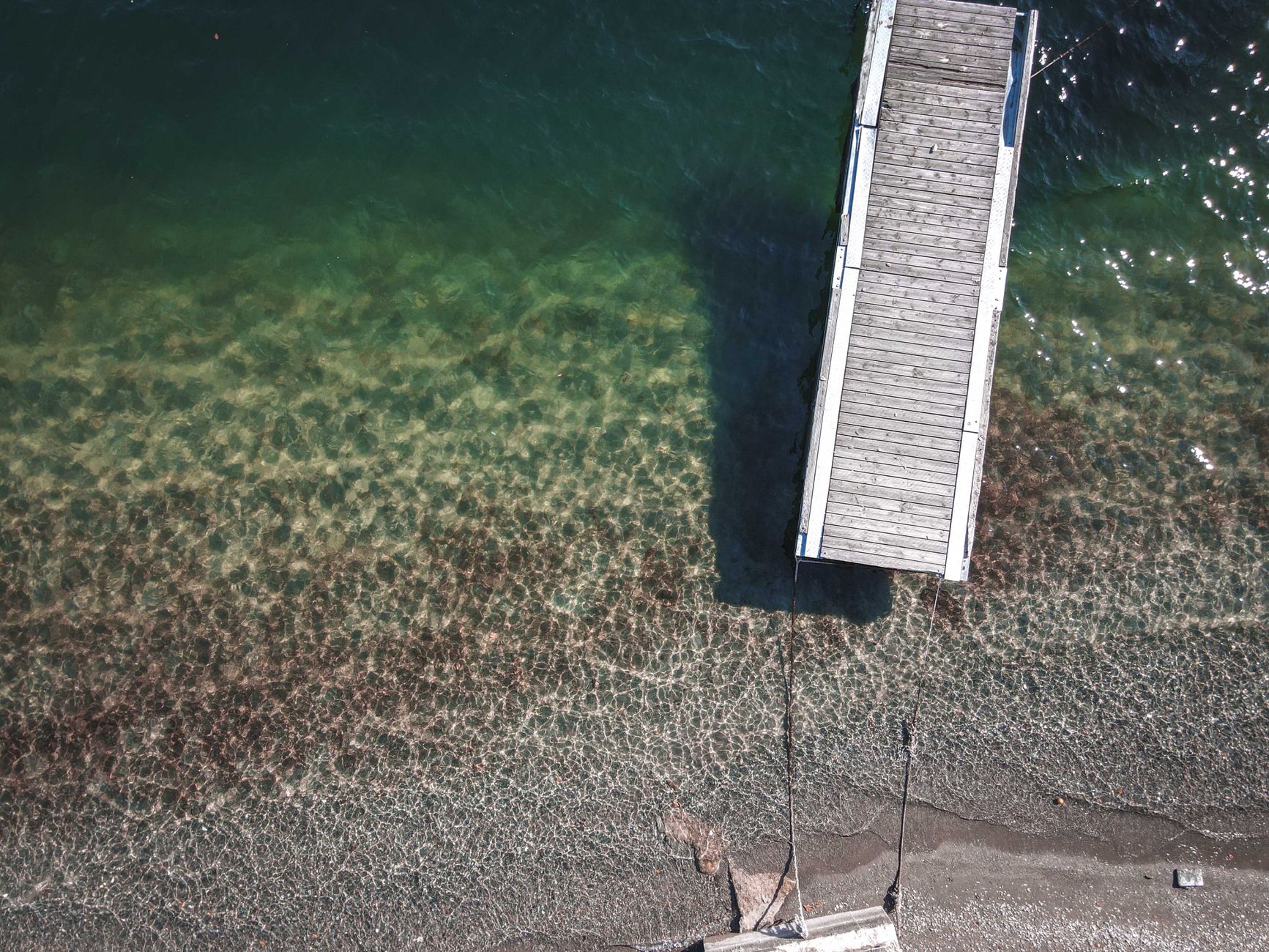
Use a marked pole or a weighted line, not a guess. Take readings at the outboard end of the dock, at the lift location, at the mouth of the slip, and then at intervals down the canal centerline toward the main channel. A handheld depth sounder from a small boat does the canal-length portion faster and better than a pole from the seawall.
Write down the time, date and tide stage with each reading, and then reduce them to a common reference. A depth of four feet means nothing without the tide stage attached; four feet at low water and four feet at high water describe two completely different properties.
Ask the seller for their own numbers and for how they measured. Then verify anyway.
Tide Ranges and Seasonal Low Water
Southwest Florida’s tides are modest compared with much of the U.S. coast, and the pattern through the year is mixed — some days with two distinct highs and lows, others with a single dominant cycle. Modest range still matters when the margin under your keel is measured in inches.
The variable that catches people is wind-driven water level. Strong, sustained offshore winds — the northerly and northeasterly flow behind winter cold fronts — can push water out of Charlotte Harbor and the surrounding bays and hold levels well below the predicted tide for a day or more. Boaters here call these blowout tides, and they are the condition that turns a marginal dock into an unusable one. Barometric pressure contributes as well. A dated dock is one of the most common fixer-upper items buyers underestimate, and our buying a fixer-upper on the Gulf Coast explains what to check before assuming it is usable as-is.
Predicted tides come from NOAA’s tide prediction service for the relevant station. The wind adjustment does not, which is why local knowledge and a real low-water sounding matter more than a table.
Draft Requirements by Boat Type
Match the measurement to the vessel, honestly. Draft is measured at rest, fully loaded, with the drive down where applicable — not the brochure number for an empty hull with the engine trimmed up.
Flats skiffs and small bay boats draw the least and open the most addresses. Center consoles and larger bay boats sit in the middle and are the practical majority in this region. Larger outboard-powered vessels, inboard boats, sportfish hulls and anything with a deep-V running surface draw meaningfully more, and inboards are less forgiving of touching bottom than an outboard that can be trimmed. Sailboats with fixed keels are the strictest case on depth as well as on clearance.
Then add operating margin. A working rule many local boaters use is to want at least a foot of water beneath the deepest point of the running gear at the lowest water you expect to encounter, and more if the bottom is hard rather than soft. Buying with zero margin means planning trips around the tide table for as long as you own the house.
The Gulf access explainer covers the overhead side of the same analysis.
Silting, Dredging and Maintenance Realities
Canals fill in. Sediment enters from stormwater runoff, from shoreline erosion, from prop wash and from storm events that move a great deal of material at once. Dead-end canals and canal mouths are where it accumulates first.
So the useful question is not only “how deep is it,” but “who is responsible for keeping it that way.” The answers vary. In some communities dredging of a shared waterway is a county or special district function. In others it falls to a homeowners association. In many cases, maintenance of the water immediately at a private dock is the owner’s problem entirely.
Dredging is also permitted work. Any excavation in navigable or state waters typically requires review — county approvals, the Florida Department of Environmental Protection, and depending on the work and location, the U.S. Army Corps of Engineers. Seagrass presence complicates it further. This is not a weekend project, and it is not inexpensive. If a canal needs dredging to make your boat work, price and permit that before closing, not after.
Ask specifically whether the canal has been dredged, when, by whom, and whether another round is being discussed. Neighbors answer this question better than anyone.
Who to Ask and What to Document
Build your picture from several independent sources. The seller, in writing, on depth and dredging history. Two or three neighbors with boats — they will tell you the truth about the canal in five minutes. A local marine contractor, who will know the waterway and can inspect the seawall and dock at the same time. The homeowners association or district, if one governs the waterway, on maintenance responsibility and any planned work. And the county building department, for the permit history on the dock, the lift and any seawall work, which also tells you whether the existing structures are permitted at all.
Document what you learn. Photographs of your soundings with a tide-stage note, the marine contractor’s report, and the permit records together form the record you will want if anything is later misrepresented — and the record a future buyer will thank you for.
Fitting Depth Into Your Offer Timeline
Depth work belongs at the front of the inspection period, not the end. The reason is scheduling: a marine contractor’s inspection, a low-tide visit and a dredging or dock-permit inquiry all take calendar days, and a low tide at a convenient hour may only occur a few times inside your window.
A practical sequence: on day one, order the marine inspection and pull the permit history. In the first week, take your own soundings at the lowest available water and run the canal by boat. In the second week, get contractor pricing on anything the inspection flagged — seawall, lift capacity, dock structure. Then decide, with numbers, whether to proceed, renegotiate or walk.
If depth turns out to be marginal, you have three honest options: buy a boat that fits the water, budget for dredging with permits confirmed in advance, or keep the boat at a marina and treat the dock as a smaller vessel’s home. All three are legitimate. What is not legitimate is assuming the problem will resolve itself, because sediment moves in one direction.
If you want help arranging a low-tide sounding visit or a marine inspection on a specific property before your inspection period runs out, reach out to Sabatino Campilii. It is the least expensive hour in the entire transaction and it protects the most expensive assumption in it.
Sabatino can answer it in five minutes — no pressure, no listing-agent spin.

Realtor®, License SL3363040
25-year builder, developer, and licensed Realtor® representing buyers and sellers across the Southwest Florida Gulf-coast pockets. Reviewed and published June 27, 2026.
Have Sabatino represent you — before you call any listing agent.