North Port Home Buyer’s Guide
North Port is the largest city by land area in Sarasota County, and that single fact explains most of what confuses buyers about it. When someone says “we’re looking in North Port,” they could mean a brand-new home in a master-planned village near the Braves’ spring training ballpark, or a 1970s block house on a quarter-acre with a well and a septic system twenty minutes inland, or a wooded lot on a dirt-quiet street with no neighbors on either side. All three are North Port. They do not live alike, they do not cost alike, and they do not carry the same due-diligence list.
Here is how to think about the city before you start touring.
Where North Port Fits on the Map
North Port sits in southern Sarasota County, wedged between Venice and Englewood to the west, Port Charlotte and Charlotte County to the south, and the Myakka River corridor and open ranchland to the east. US-41 clips its southwestern edge. I-75 runs through the city, with the Sumter Boulevard and Toledo Blade Boulevard interchanges serving as the main arteries in and out.
The important orientation point: North Port is not a coastal city. It has no Gulf frontage. What it has is inland land, a lot of it, close enough to the coast that a beach afternoon is a drive rather than an expedition. That is the entire value proposition, and for a large share of buyers it is the right trade.
The city’s street grid originates with the same mid-century Florida land-development pattern that produced neighboring Port Charlotte: a very large area platted into individual residential lots decades before the population arrived. The consequence you feel today is a city with an enormous number of scattered vacant lots, homes of wildly different ages standing side by side, and infrastructure that arrived in phases rather than all at once.
Master-Planned Communities vs Older Sections
Practically, North Port splits into two buying experiences.
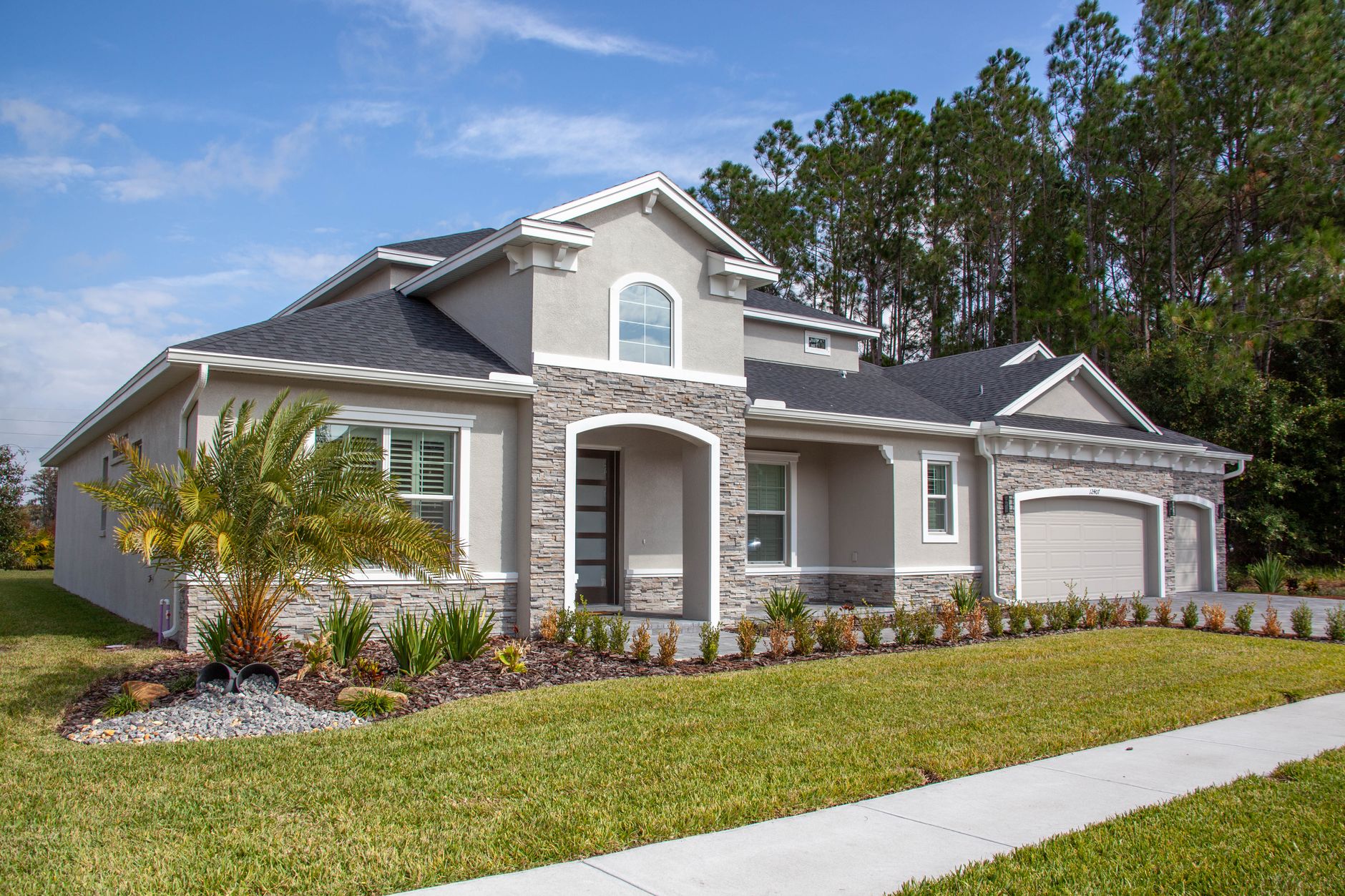
The master-planned side is concentrated in and around the Wellen Park area in the city’s southwest, near the West Villages corridor and CoolToday Park, the Atlanta Braves’ spring training facility. This is newer construction, planned villages with their own amenity centers, a town-center commercial core, sidewalks, uniform streetscapes, and community association governance. Buyers here are getting predictability: known builders, known floor plans, known association rules, and a neighborhood that will look roughly the way it looks today.
The tradeoffs are the usual ones. You accept a community development district or association assessment structure, you accept design restrictions, and you accept smaller lots in exchange for amenities and cohesion. Ask specifically what your total recurring obligation is — association dues plus any district assessment that appears on the tax bill — and get it in writing before you fall in love with a floor plan.
The older platted sections cover most of the rest of the city. Streets here were laid out long ago and filled in gradually, so you will see a 1978 block ranch next to a 2004 build next to a house completed last year. There is typically no association, no design control, and no shared amenity. Lots are generally larger than in the planned villages. Prices are generally lower for equivalent square footage.
The tradeoff is variability. Your neighbor’s lot might stay wooded for another decade or a builder might break ground next spring. Some streets are fully served by central water and sewer; others rely on private wells and septic systems. That is not a defect, but it is a real difference in maintenance responsibility and in what you should have inspected.
Larger Inland Lots and Acreage Options
If land is what you want, North Port and the ranchland east of it are where Sarasota County still has it at a scale coastal buyers cannot find.
Buyers looking for room for a workshop, an RV, a boat on a trailer, a garden, or horses should look inland and east rather than pushing their budget toward the coast. What you should verify before you commit:
- Zoning and permitted use. A large lot is not automatically a lot where you can keep animals, run a home business, or put up a detached shop. Confirm the zoning classification with the City of North Port and read what it actually allows.
- Water and sewer availability. Ask whether the parcel is served or unserved, and if unserved, what a connection would cost should service reach the street later.
- Access and road maintenance. Is the street paved, city-maintained, or private?
- Protected habitat review. Portions of southern Sarasota County contain habitat for protected species, and clearing or building on a lot can trigger environmental review. Ask the city and county what applies to the specific parcel before assuming a build schedule.
- Wetland or floodway designation on part of the parcel, which can shrink the buildable envelope substantially.
None of these are reasons not to buy land here. They are reasons to buy it with the answers in hand.
Water Corridors and Natural Areas
The Myakkahatchee Creek — often called Big Slough — runs roughly north to south through the middle of North Port and is the city’s defining natural water feature. It is a shallow, tannin-dark blackwater creek with a wooded corridor, a canoe and kayak run, and a greenway with trail access. It is not a boating waterway in the Gulf-access sense and it should never be confused with one.
The city’s canal network, largely a drainage system from the original platting, threads through many residential streets. Some of it connects toward the Myakkahatchee and eventually the Myakka River; navigability is limited and highly segment-specific. If a listing describes a North Port property as “waterfront,” assume it means a drainage canal or creek frontage with a view and small-craft use, and verify anything beyond that yourself. Buyers who want a dock, a lift, and a route to open water are shopping the wrong city — that search belongs in Punta Gorda Isles, Cape Coral, or along Charlotte Harbor.
The Myakka River forms much of the city’s eastern boundary, and the Myakka State Forest lies to the west near the Englewood side. Warm Mineral Springs, a natural warm spring park within the city, sits in southern North Port and is a genuine local landmark rather than a marketing flourish.
Drive Times to Beaches and I-75
Be realistic here, and drive it yourself before you buy.
From most of North Port, the nearest Gulf beaches are on Manasota Key via the Englewood area to the west, or at Venice to the northwest. These are real drives — through surface streets and seasonal traffic, not five minutes. In peak season the same trip takes noticeably longer than it does in August. If beach proximity is a top-three priority, either accept the drive honestly or look at Venice instead.
I-75 access is the city’s strongest logistical asset. Sumter Boulevard and Toledo Blade Boulevard both connect the residential interior directly to the interstate, which puts Sarasota to the north and Fort Myers to the south within a manageable commute for anyone who needs to make that drive regularly.
Test your actual commute at your actual departure time, in season if possible. It is the single most common thing relocating buyers get wrong. If beach access weighs heavily in the decision, our comparison of the best beach towns in Florida for families puts North Port’s neighbors side by side on schools, beaches, and price, and our direct Englewood vs North Port comparison weighs beach proximity against overall value and selection.
County Records Buyers Should Pull
Before you write an offer in North Port, pull these yourself rather than relying on the listing:
- Sarasota County Property Appraiser record for the parcel: legal description, lot size, year built, permitted living area, and the current assessed and taxable values. Remember that a new owner’s tax basis is not the seller’s tax basis, and do not budget from the seller’s current bill.
- Sarasota County Tax Collector for the actual current tax bill and any non-ad-valorem assessments.
- City of North Port permit history for the address — additions, roof replacement, electrical, pool, well, septic.
- FEMA flood map for the parcel, plus any elevation certificate. Inland does not mean out of a flood zone; parts of North Port sit along creek and drainage corridors. See flood zone basics for Gulf coast buyers.
- Association or district documents if applicable, including the full schedule of assessments.
- Well and septic records if the property is unserved, along with a septic inspection as a contract condition.
Building a Realistic Search
Start by answering three questions honestly, because they narrow North Port faster than any price filter.
Do you want predictability or autonomy? Planned village or older platted section — that decision determines almost everything else.
How much land do you actually use? Buyers routinely pay for acreage they mow and never touch, and just as often buy a small lot and spend five years wishing for a workshop.
What is your real weekly geography? Where do you drive on a Tuesday, not on a vacation Saturday? Build the search around that map.
North Port rewards buyers who do this work. It is a city where two homes at the same price can deliver very different lives, and where the difference is almost never visible in the listing photos.
If you would like help mapping North Port’s sections to what you actually need — and pulling the county records on any parcel before you commit — reach out to Sabatino Campilii, Realtor®, License SL3363040.
Sabatino can answer it in five minutes — no pressure, no listing-agent spin.

Realtor®, License SL3363040
25-year builder, developer, and licensed Realtor® representing buyers and sellers across the Southwest Florida Gulf-coast pockets. Reviewed and published June 10, 2026.
Have Sabatino represent you — before you call any listing agent.