Choosing Between Island and Mainland Living
Every buyer working this stretch of coast eventually stands at the same fork. On one side is Gasparilla Island — Boca Grande, the village, the beaches, the pass. On the other is the mainland a few minutes east: Placida, Cape Haze, Rotonda West, Englewood, and beyond them Punta Gorda and Port Charlotte. The properties look comparable in photographs. The lives are not comparable at all. Buyers weighing those same two markets against each other may also want a direct Boca Grande vs. Naples comparison for a closer look at pricing and pace of life. Two of the region’s most-visited barrier islands get compared directly in our Siesta Key vs. Anna Maria Island guide.
I’m Sabatino Campilii. I sell on both sides of that causeway, and I have watched buyers thrive on one side and quietly regret the other. This is the framework I use to help people figure out which one they actually want.
The Decision Behind the Decision
The island-versus-mainland question is rarely really about the house. It is about how much friction you are willing to accept in exchange for separation.
An island imposes a boundary. Everything and everyone that reaches you has to cross water to do it. That boundary is precisely what island residents value — it filters traffic, it filters density, it filters the pace of the place. It is also, without exception, what island residents complain about, because the same boundary applies to your groceries, your contractor, your specialist appointment, and you at seven in the morning.
The mainland trades that separation for optionality. More housing stock, more price points, more services within a short drive, more direct routes to everywhere. It is easier in almost every practical dimension. What it does not give you is the boundary.
Most people know which one they are before they can articulate why. The purpose of the rest of this is to make sure the version of the trade you are imagining matches the version you would actually live.
Access, Bridges and Travel Time
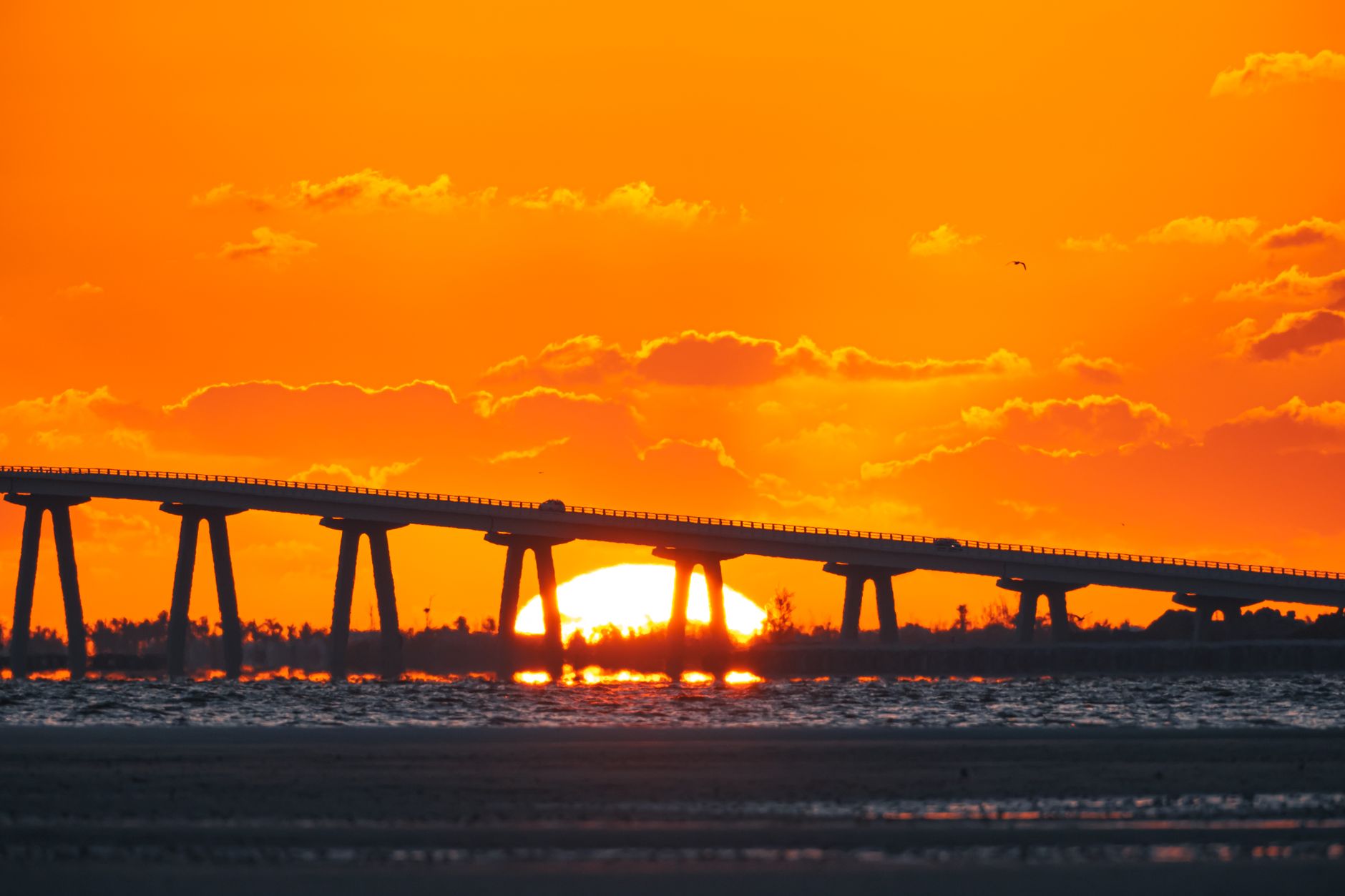
Gasparilla Island is reached from the mainland by the Boca Grande Causeway from Placida, and there is a toll for vehicle access. That single fact reshapes daily life in ways that compound.
Every trip off-island is a bridge trip. There is no alternate route. That means the causeway is a single point of dependency for you and for everyone who serves you. Traffic backs up during peak season and during events. Weather closes bridges. Maintenance affects them. In a storm evacuation, a barrier island evacuates first and the causeway is the only way out — which is why island residents take evacuation orders seriously and leave early rather than debating.
Practical questions to answer honestly before choosing the island:
How many times per week will you realistically leave? Add the causeway trip to each one and see whether the number still feels comfortable.
Where is the nearest airport you would use, and what does that drive look like from the island versus from the mainland? Add causeway time and seasonal traffic to the island figure.
Do you have any commitment — medical, professional, family — that requires being somewhere at a fixed time on a fixed day? A bridge is a variable in that equation.
On the mainland, the corresponding question is less about barriers and more about distance. Placida and Cape Haze put you minutes from the causeway. Rotonda West is a straightforward drive to Englewood and Port Charlotte. Punta Gorda has its own downtown, its own airport, and interstate access. The mainland’s constraint is that things are spread out, not that they are cut off. If you are weighing specific mainland communities, the Cape Haze and Rotonda gated communities overview covers that corridor in detail.
Services, Deliveries and Contractors
This is where island ownership becomes concrete, and it is the category buyers most consistently underestimate.
Trades and contractors. Every plumber, electrician, roofer, air conditioning technician, painter, and marine contractor who works on the island has to cross the causeway with their truck, their crew, and their materials. Some build that into their pricing. Some simply do not take island work. The practical result is a smaller pool of available trades, longer lead times, and higher costs than for identical work on the mainland. Island owners who do well here cultivate relationships with specific reliable people and hold onto them.
Deliveries. Standard parcel service reaches the island, but large-item delivery, appliance installation, and furniture delivery can involve scheduling constraints and surcharges. Building materials require planning.
Emergency response. Island communities have emergency services, but the geography is what it is. This is worth understanding rather than avoiding — ask about response arrangements for the specific area you are considering.
Property management and caretaking. Because so many island properties are seasonally occupied, a caretaking culture exists here that does not exist to the same degree on the mainland. Good caretakers are genuinely valuable and genuinely in demand. If you will not be here year-round, line one up.
On the mainland the same services are simply easier — more providers, shorter drives, faster response, no bridge in the cost structure. That difference shows up every time something breaks, and things break faster near salt water than most buyers expect. The maintenance load itself is covered in salt air maintenance for coastal homes.
Grocery, Medical and Everyday Errands
Day-to-day logistics are the texture of whether a place feels comfortable or effortful.
Boca Grande has a village with local shops, dining, and services oriented toward residents and visitors. What it does not have is the full range of a mainland commercial corridor: big-box retail, a wide selection of grocery stores, chain pharmacies on every corner, or a dense field of medical specialists. Island residents typically do a large mainland grocery run periodically and fill in locally, and they maintain relationships with mainland medical providers.
For a fit and independent household, that pattern is easy. For a household with regular medical appointments, mobility considerations, or anyone who will eventually stop driving, it is a genuine planning question. I raise this with older buyers not to discourage them but because the household that works beautifully at sixty-five may need a different arrangement at eighty, and it is far better to think about that at purchase than to be forced into a rushed sale later.
The mainland corridor — Englewood, Port Charlotte, Punta Gorda — has the full complement: multiple grocery options, retail, pharmacies, hospitals, and specialists. That is the mainland’s most underrated advantage and the reason a meaningful number of island owners eventually move east.
Privacy, Density and Noise
The island’s defining quality is restraint. Gasparilla Island is small, its historic village core has real architectural character, and development there is regulated with a deliberateness that has kept its scale intact. The result is low density, quiet streets, a strong golf-cart-and-bicycle culture, and a community where a large share of the properties are seasonally occupied.
That produces a distinct rhythm. In season, the island is active — the village is busy, the beaches are used, and the tarpon fishery in Boca Grande Pass draws people from a long way off. Off season, it is very quiet. Some owners love both halves of that cycle. Some find the quiet stretch longer than they expected.
The mainland is more heterogeneous. You can find genuinely quiet, low-density, deed-restricted neighborhoods on the mainland — but you can also find yourself beside a road that carries real traffic, near a community with active amenities, or in a section still filling in with construction. On the mainland you have to select for quiet rather than receive it by default.
Anyone weighing the water side of the equation should also understand how different the inshore and pass environments are; Boca Grande Pass versus Gasparilla Sound walks through that.
Ownership Logistics Compared
A few structural differences worth putting side by side.
Cost of everything operational. Island trades, deliveries, and services generally cost more. Budget for it explicitly rather than being surprised annually.
Insurance. Coastal and barrier-island properties are underwritten differently than properties further inland, and elevation, construction type, roof age, and opening protection all matter. Get real quotes for the specific property before you are under contract, and check the current FEMA flood map for the parcel rather than relying on a prior determination.
Storm exposure and preparation. A barrier island is a barrier island. Have a written plan, know your evacuation route and timing, and have someone able to prepare the property if you are away.
Rental rules. These vary by jurisdiction and by community and they are more restrictive on the island than many buyers assume. Owners considering rental use should start with Boca Grande rental considerations for owners.
Community governance. Both sides have associations, deed restrictions, and in some cases districts. Read the documents either way; the framework is in understanding HOA and CDD structures.
Resale audience. Island properties appeal to a narrower, more specific buyer. Mainland properties appeal broadly. That affects how a property trades, and it is worth understanding at purchase rather than at listing.
A Framework for Choosing
Five questions, answered honestly, usually settle it.
How often will you cross the bridge? Count real trips, not idealized ones. If the answer is most days, the island will wear on you.
How much service dependency does your life have? Regular medical care, frequent contractor work, or a demanding travel schedule all argue for the mainland.
How much do you value the boundary? If separation is the reason you are looking here at all, the mainland will not deliver it no matter how nice the house is.
What is your horizon, and how will your needs change over it? Buy for the household you will be, not only the one you are.
Can you test it? This is the most useful advice in this piece. Spend real time on the island before buying there — ideally in both the busy season and the quiet one. Do the grocery run. Sit in the causeway line. Try to get a contractor out. A week of ordinary logistics teaches more than a dozen showings.
There is no wrong answer here. There are people for whom nothing but the island will do, and people who are far happier ten minutes east with the causeway available whenever they want it. Knowing which one you are before you buy is the whole exercise.
If you want to walk both sides of that causeway with someone who works them daily and will tell you plainly which fits, reach out and we’ll set it up.
Sabatino can answer it in five minutes — no pressure, no listing-agent spin.

Realtor®, License SL3363040
25-year builder, developer, and licensed Realtor® representing buyers and sellers across the Southwest Florida Gulf-coast pockets. Reviewed and published July 17, 2026.
Have Sabatino represent you — before you call any listing agent.